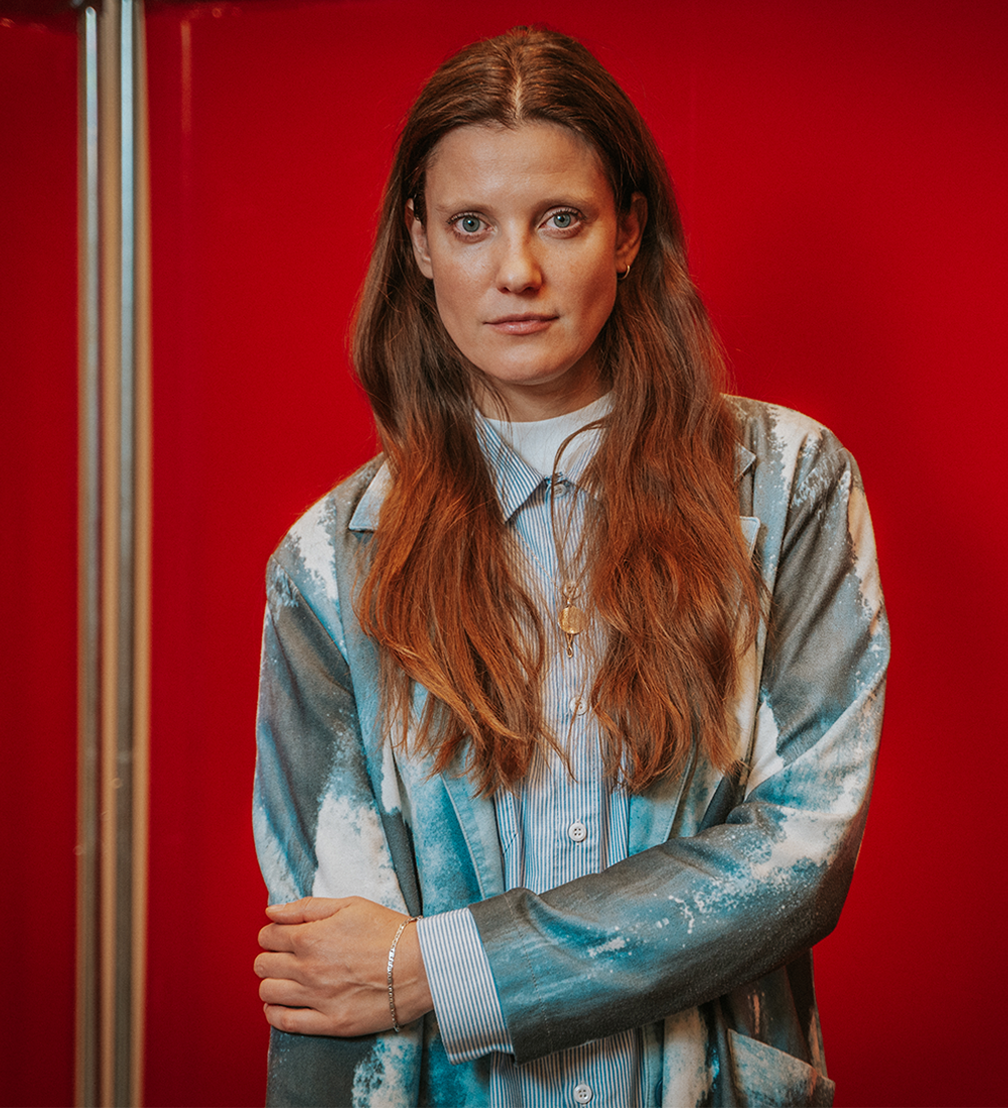
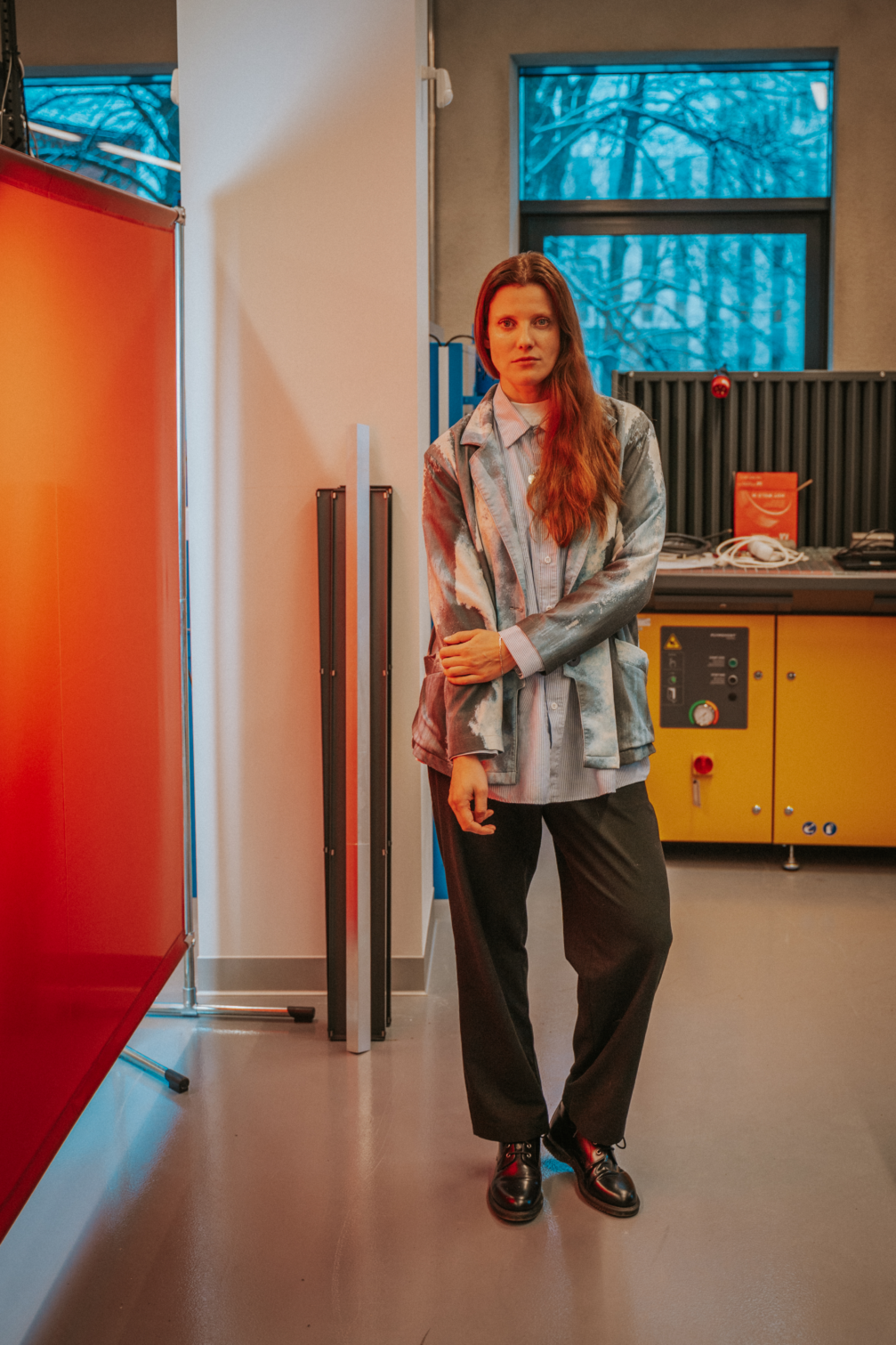
For Dace Sūna, design is a tool for storytelling that allows her to speak about global issues and look beyond the everyday. She works with light and space, creating installations and collectible design objects that balance on the boundary between art and design. Having studied in New York and Eindhoven, Dace has now returned to Latvia. This year, her works have been presented at several international exhibitions and events. In conversation with the young and talented designer, we discuss her international experience and the challenge of capturing the wondrous nature of light.
I meet Dace Sūna at the end of November, just a few days before she heads to the United States to take part in the Alcova exhibition during Miami Art Week as one of the forty selected designers. Earlier this year, her work was presented at Expo 2025 in Osaka, where Dace’s Sky-Set light object was included in 89th Second, the Latvian design showcase within the Design Beyond Things exhibition organised by the European Union. She also took part in Tactile Baltics exhibition, alongside twenty other designers, introducing contemporary Baltic design to the audiences of Milan Design Week.
In her practice, Dace explores the relationship between space and light, drawing inspiration from nature and its elemental forces. She studied interior design at the Fashion Institute of Technology in New York, and later, while living in Los Angeles, learnt the craft of neon making, creating spatial light objects. In the Netherlands, Dace turned towards conceptual installations, using light as a poetic means of expression. Her graduation project, Cosmic Dancer, went on to win the National Design Award of Latvia 2024 in the Environmental Design category.
Dace, tell us about the exhibition you are currently preparing for!
I am going to Miami to take part in the Alcova exhibition. I think it is one of the best platforms for young designers, because their outlook is professional yet experimental. During Milan Design Week, Alcova is one of the exhibitions I always make sure to visit myself.
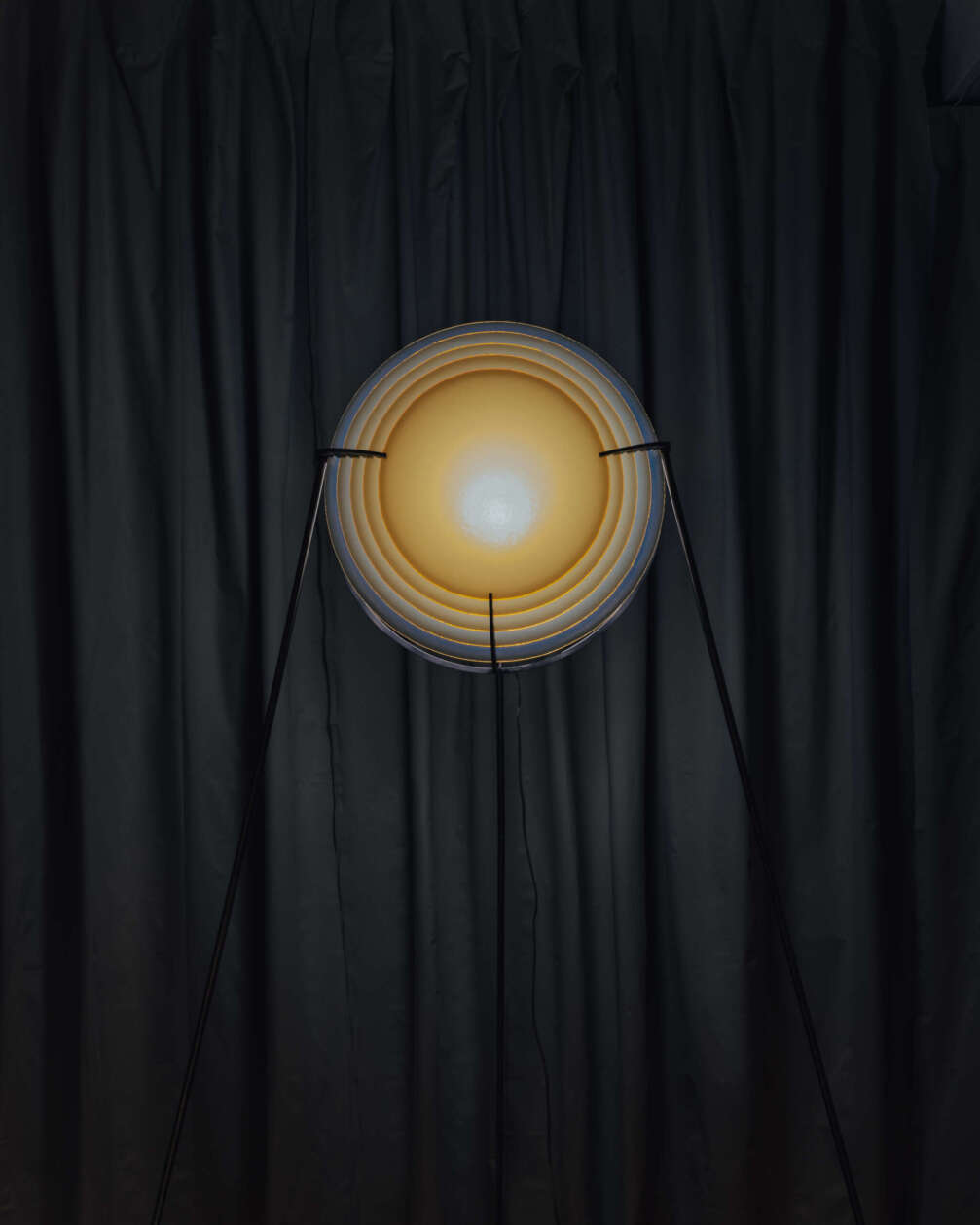
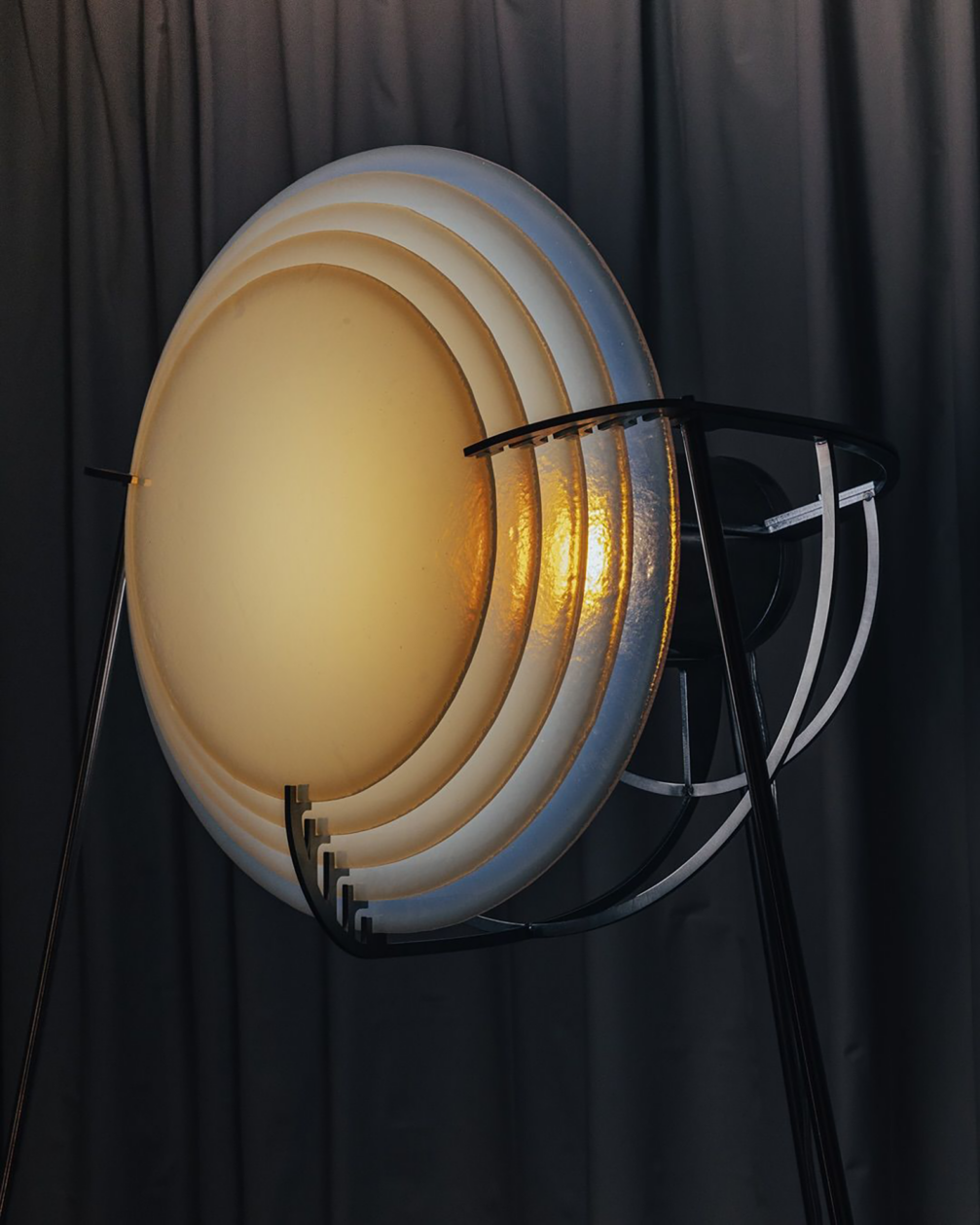
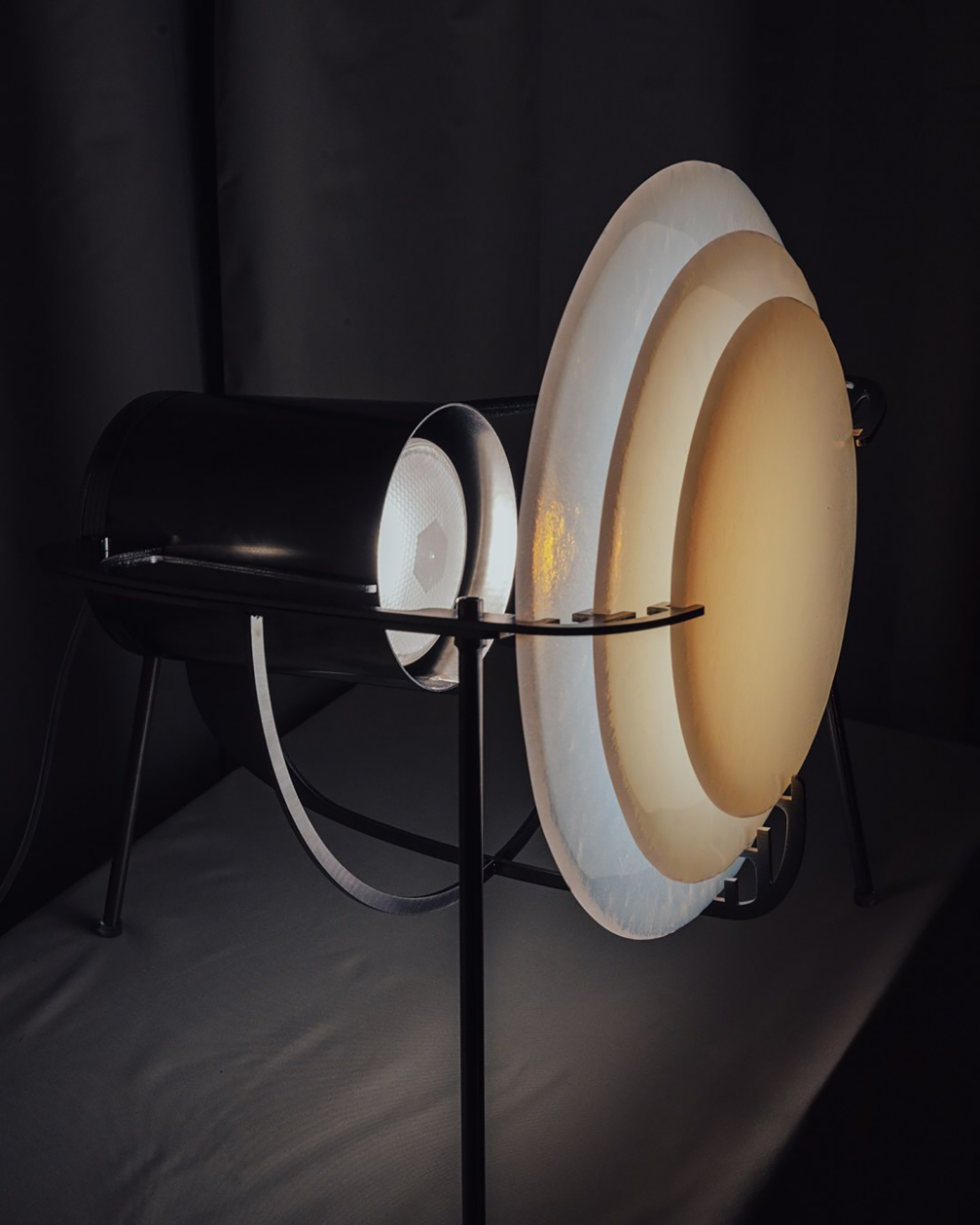
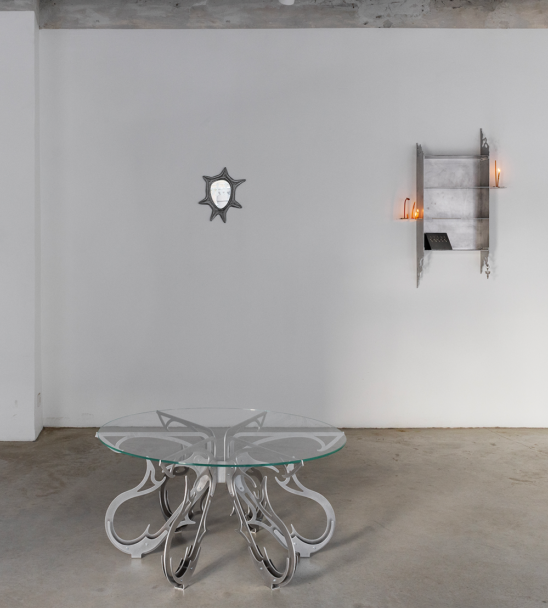
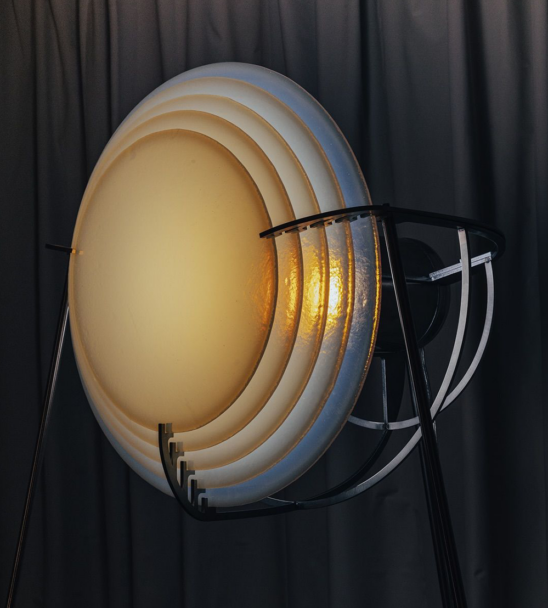
After Expo I was very tired, so at first I declined the invitation, but Alcova offered to sponsor my participation, and I decided to take this opportunity. The exhibition will take place in the oldest hotel in Miami, and I will have my own room for the display. I will be presenting four works: the Sky–Set light, which I have improved technically, a smaller tabletop version Sky–Set Mini, and two mirrors which have not been shown anywhere yet. They are still prototypes — I had to develop them very quickly, as I was invited only in early October. By mid–November the works already needed to be shipped to Miami, and happily they are there now. Exhibiting requires serious logistics, and I still have the installation work ahead of me.
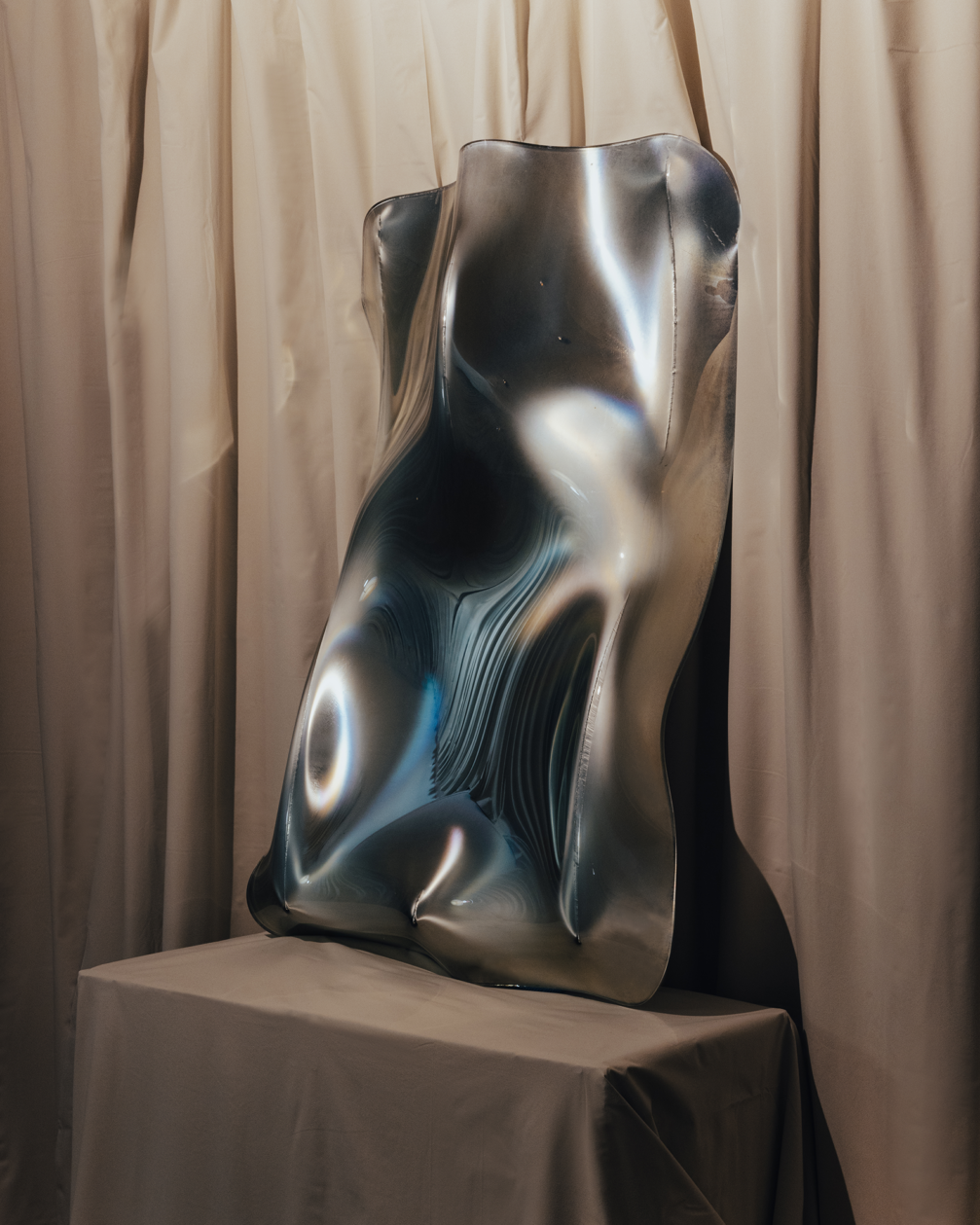
Now you are heading to Miami, earlier this year your works were shown at Expo in Osaka and Milan Design Week. What has your experience been like participating in such large international events?
In both cases my work was part of a group exhibition. In Milan, with Tactile Baltics, we represented Baltic design as a whole. I must say — it went very well, and my work received a lot of attention. In Milan I also met representatives of Mumbai Design Week, who invited me to create an installation. Unfortunately, the project did not materialise because they could not secure the necessary funding.
At Expo, Latvian and Lithuanian designers also had their own stage, so to speak, as we exhibited in the Baltic Pavilion and therefore gained greater visibility. We have already begun discussions about a potential participation in future design events, where alongside EU design there could be a separate Latvian showcase.
Still, it is hard to evaluate the benefits immediately — perhaps someone will contact me a year or two later. Who knows, maybe if I had not been in Milan and Expo, Alcova would not have invited me to Miami at all.
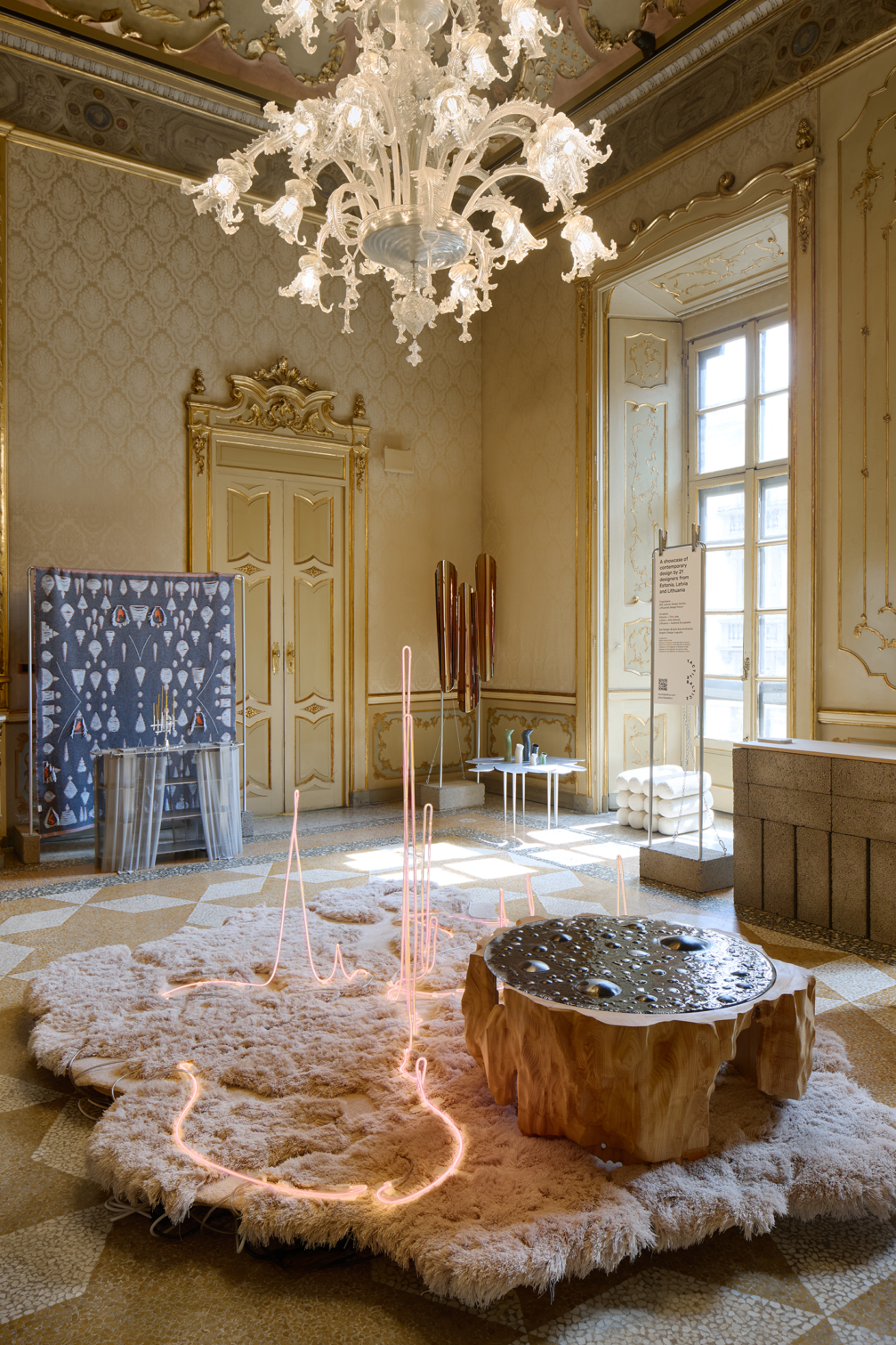
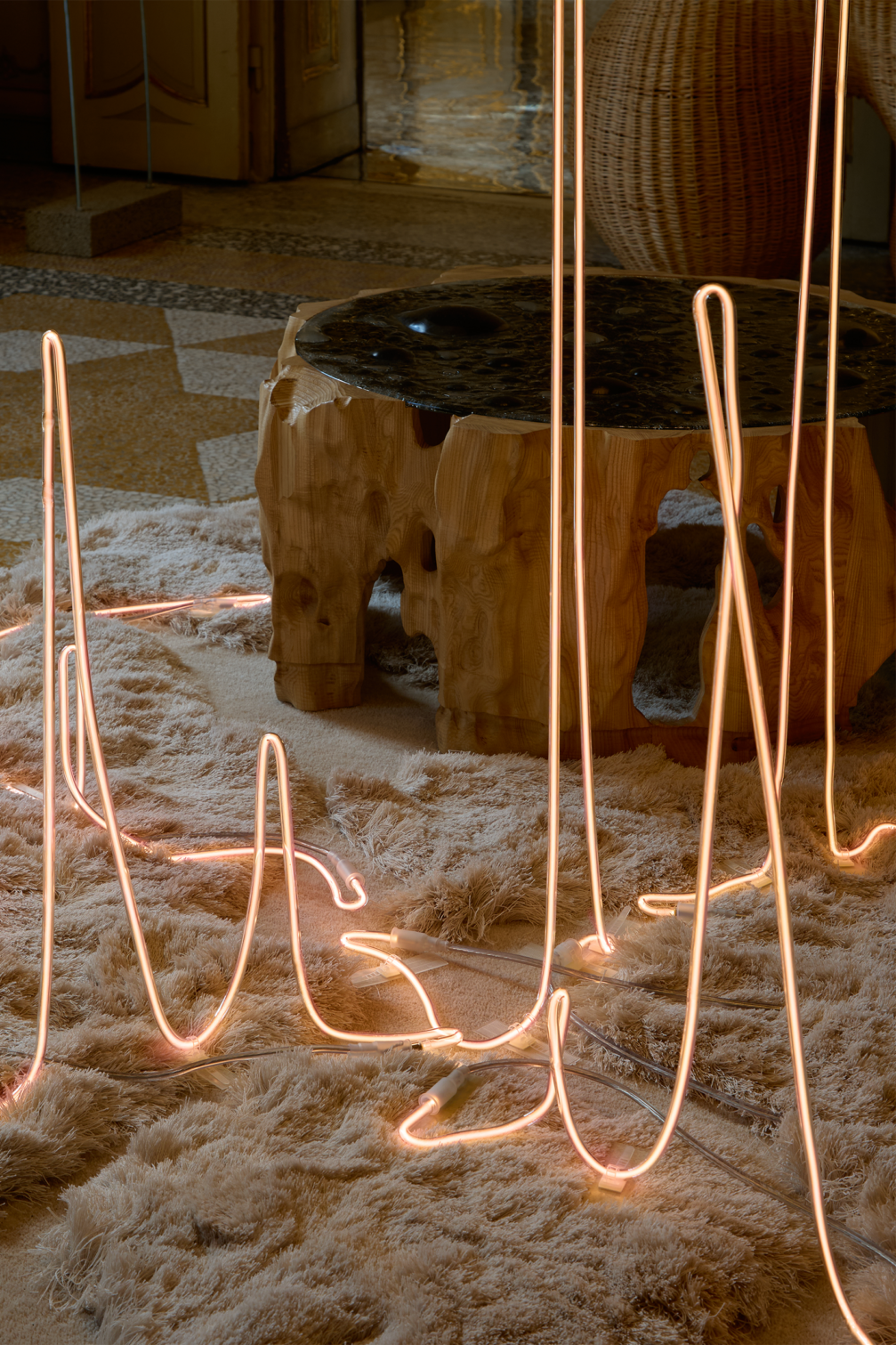
You have worked in design in the United States and the Netherlands, and now you are back in Latvia. What are the biggest differences between the design field here and elsewhere?
The design field in Latvia is not yet as established. Together with colleagues, we created the Home Ground platform, because young designers here do not really have a place to exhibit. We are missing that kind of «in-between» space — either you are still a student and can show work at school, or you are already fully established. In the Netherlands there is a lot of experimental design, and young designers truly have space to exist and develop.
Additionally, the purchasing power in Latvia is also quite low. It is very difficult to sell collectible design here. With time, the field will certainly evolve, but for now it is still very small. That is why I try to look abroad — participate in exhibitions and build international collaborations. In fact, I have worked relatively little in the Latvian design industry.
You mentioned collectible design. Is it the synthesis of design and art that interests you most?
Yes, it is. I do not see myself as an industrial designer. Right now, I am not interested in designing a practical object which would later be mass-produced. I want to continue experimenting with material and light — to create something unique, something on the border between design and art. The conceptual narrative is important to me. I want to create works that address global issues, such as Sky-Set, which speaks about atmospheric pollution
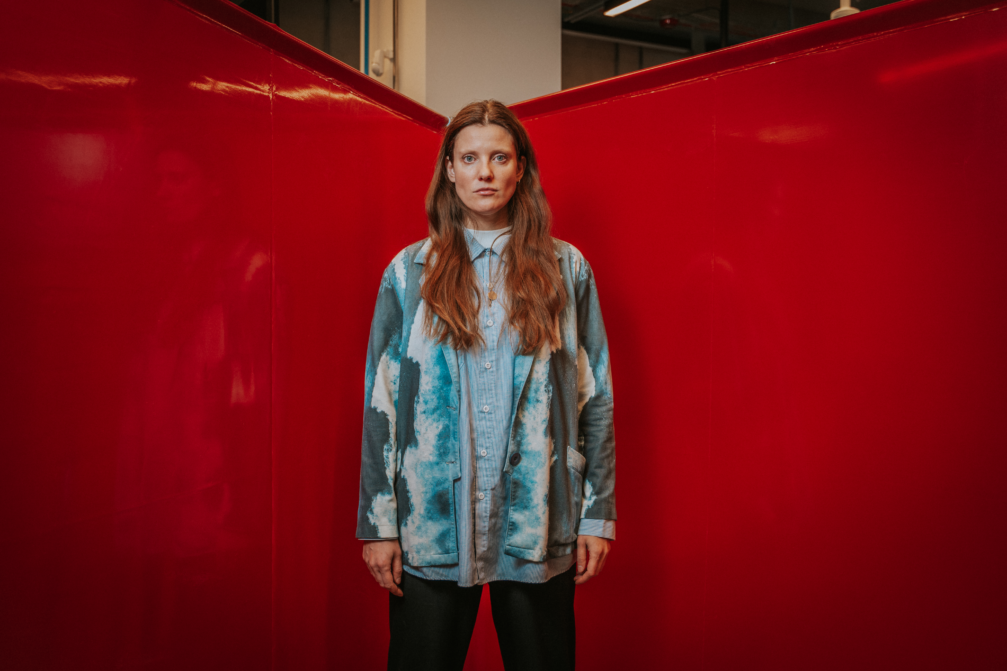
You studied contextual design in Eindhoven. Before that you studied interior design in New York, which can be a very practical and functional discipline. How did this shift happen?
I think this is actually a good combination for me. Interior design education is indeed very practical — it gives you the knowledge necessary to work in the industry. But even then my graduation project was quite conceptual — I created a space which, as you move through it, activates your senses and makes you feel more alive. Already then I tried to go beyond a purely practical interior.
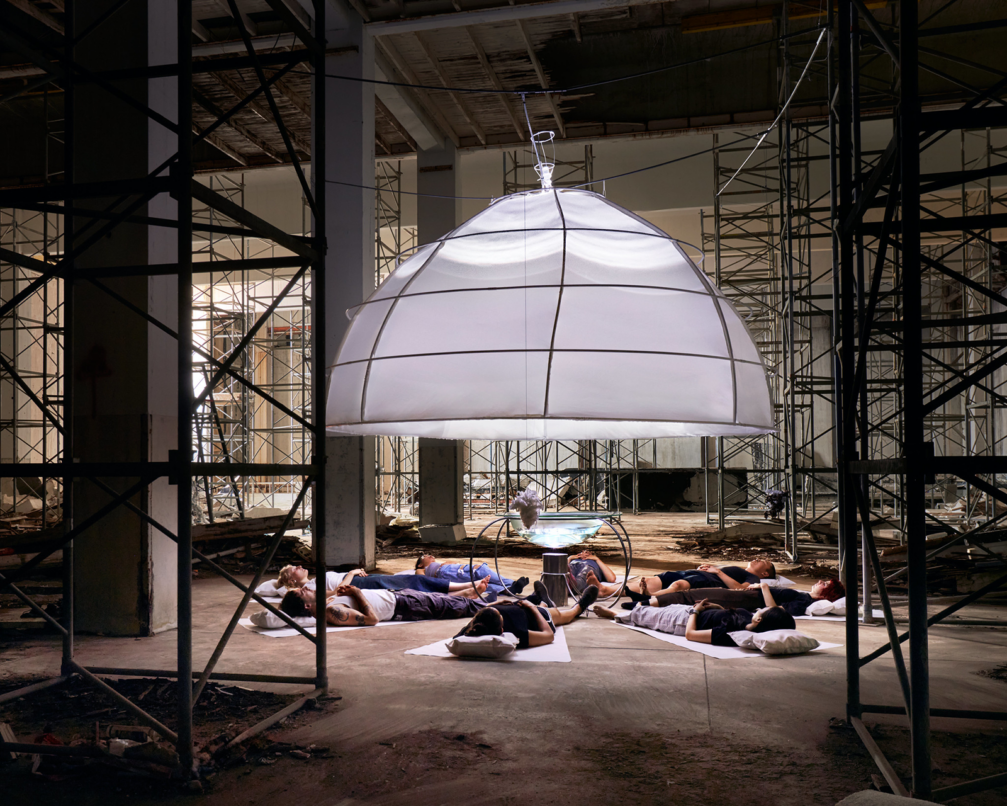
In Eindhoven I had the opportunity to fully realise conceptual ideas. I created installations using sand, water, and ferrofluid. After that came Cosmic Dancer — a meditative experience that is still a spatial environment but not a practical one with walls, tables, and chairs. In this work, what interests me most truly crystallised, and I want to continue creating installations where space and light interact.
Why is it important for you to move beyond the functional in your work?
We have our everyday life — we wake up, work, go to the grocery store. In my work I want to remind people that there is something beyond the everyday. We are tiny human beings running around the world, around Riga, each of us with our own worries, but I also want to think about the bigger perspective — why we are here at all. Life is short, we are only here for a moment, and there are things greater than ourselves. It is important to remember that cosmic image! In a way, design is a spiritual practice for me.
When I lived in Los Angeles, I completed Kundalini yoga teacher training. That was the beginning of my journey into spiritual practice. At first, I perhaps felt uncomfortable talking about these things publicly, but now I feel increasingly free to do so. Why should I not talk about them through my work? We only have one life, and I want to talk about what matters to me.
Alongside spiritual practices, in Los Angeles you also turned to light and neon. How did that come about?
In Los Angeles, light and bright colour entered my work, which at first, as a Latvian, felt unusual.
Before that, I lived in New York for six years, and life there was like a constant race — I worked a lot and partied a lot. At some point I wanted to escape. Life in Los Angeles was completely different — calmer and healthier. That is where I really began to develop myself. I went to ceramics classes with a friend, started practising yoga. By chance I discovered a neon workshop and decided to apply. I remember walking into the studio for the first time — it felt like diving into a colourful world full of wonder. I was fascinated by the process of making neon. First, you work with fire, shaping glass. Then you put it through a vacuum process — for a moment there is literally nothing inside the glass. I saw parallels with cosmic vacuum in this process. Then the glass is filled with different gases, each with its own colour. Although the process is highly technical, there is something magical about it — you work with cosmic elements. For example, helium is found in the Sun.
Light is a complex medium. What is special about it for you?
Light is not physical, you cannot touch it. To work with light, in fact, you must work with something else. For example, in Eindhoven I often used water, because as light passes through it, different effects appear. Now I work extensively with glass. I go to Līvāni, where I have begun learning glassblowing. In relation to light, glass has properties similar to water or smoke, yet it can take on a solid form and become a physical object.
Light also has something esoteric about it. And I feel that giving light to the world is my mission. It is both poetic and entirely physical — something I can do through my work.
And what is the specificity of working with light as an intangible medium?
Although light is intangible, behind it there is a lot of technical work. There are wires, transformers, connections. I always have to struggle with something; installation usually takes time and nerves. There have been moments when I think — never again! But there is something magical about light which is much harder to capture in solid objects. For example, at Expo there was a girl who stood in front of Sky-Set and began to sing. There is something special about light works, and I think viewers connect with them differently.
You make your works yourself. Are craft skills important in your practice?
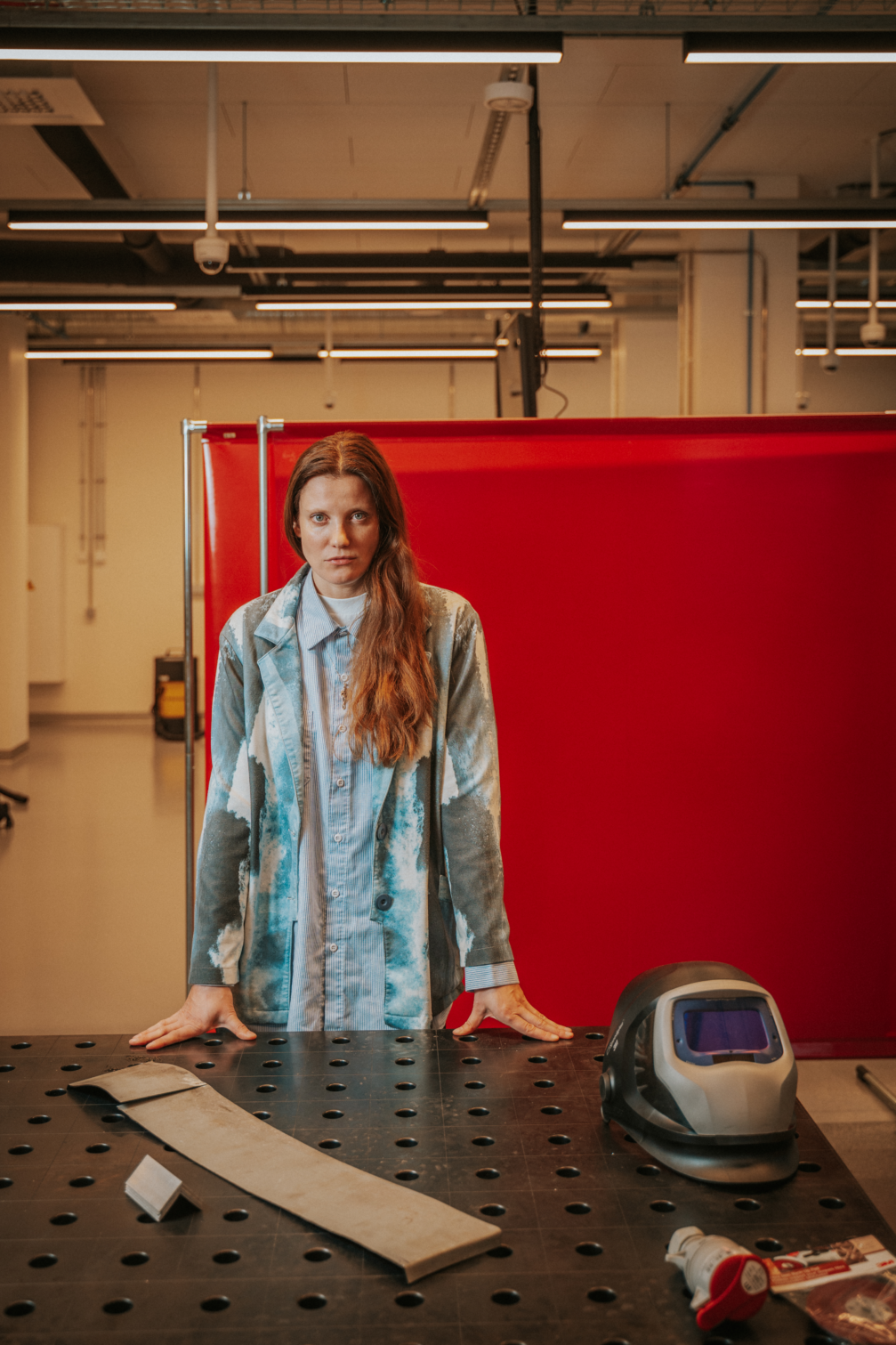
I enjoy making my works myself. In Eindhoven and also before that, I created everything from scratch. I like welding, working with metal and glass, and I still make many elements myself. But right now, I neither have the equipment nor the time to make absolutely everything. When I cannot manage on my own, I find someone who can produce the required component based on my drawings. I collaborate with various craftspeople. For example, mastering glassblowing takes at least five years. At the moment I take my sketches to a glassblower who physically realises my vision. Of course, it is important that I myself understand materials. If you understand a material, you immediately understand its possibilities.


Viedokļi