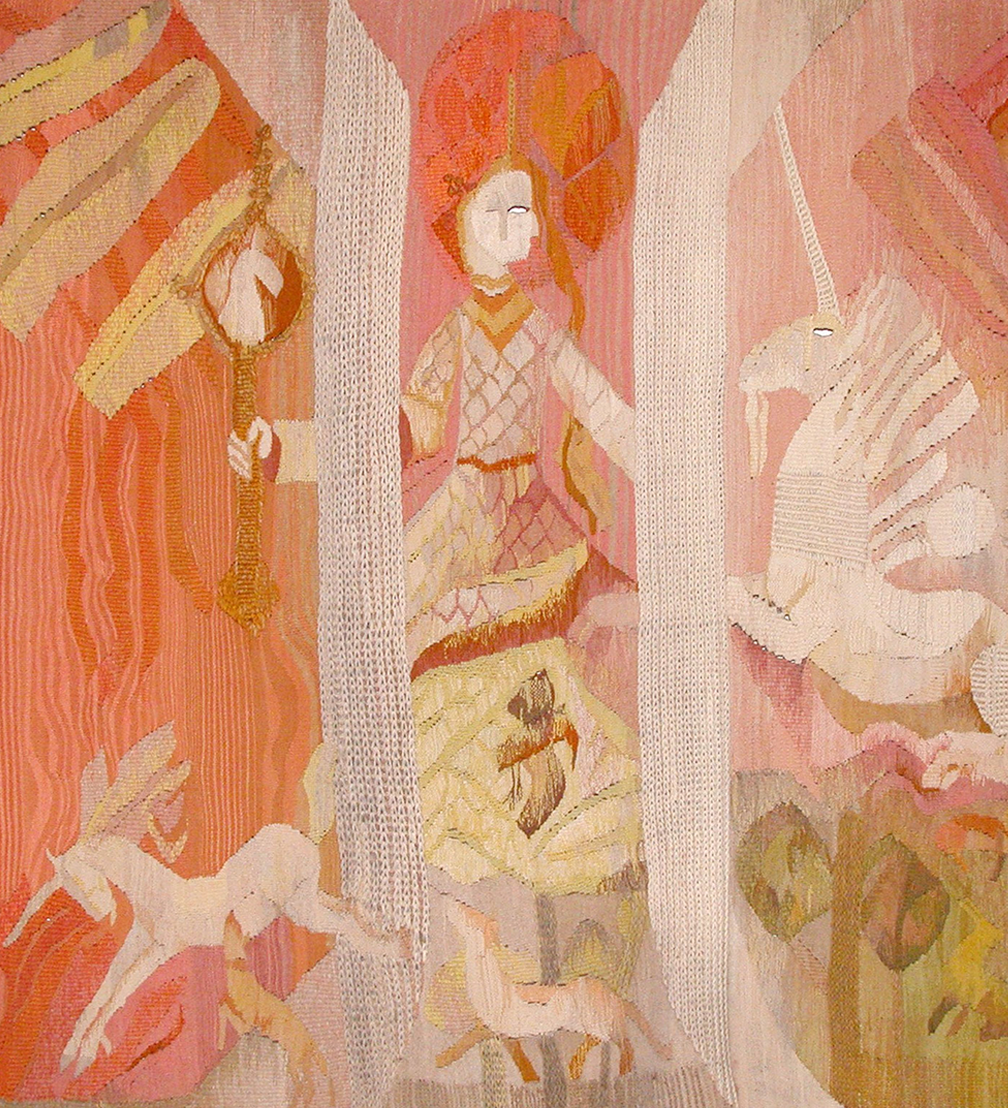
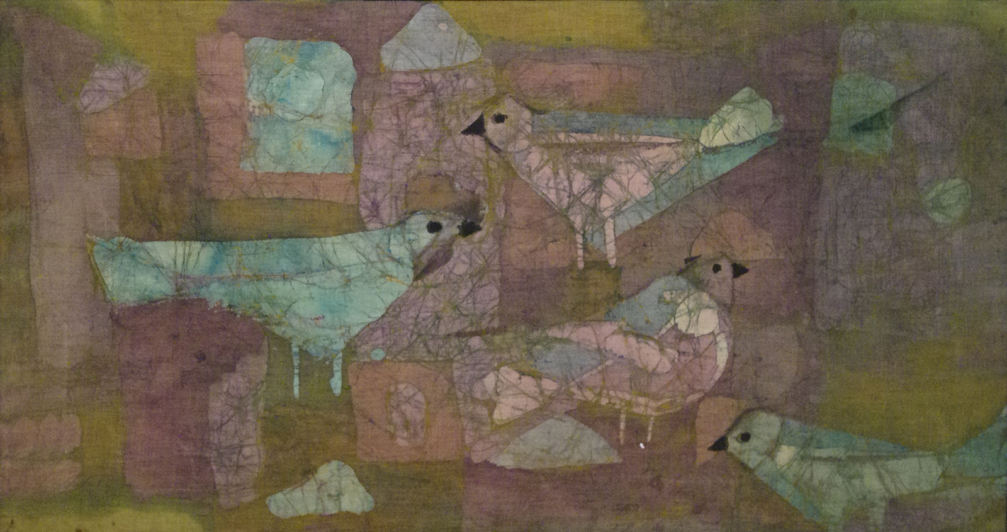
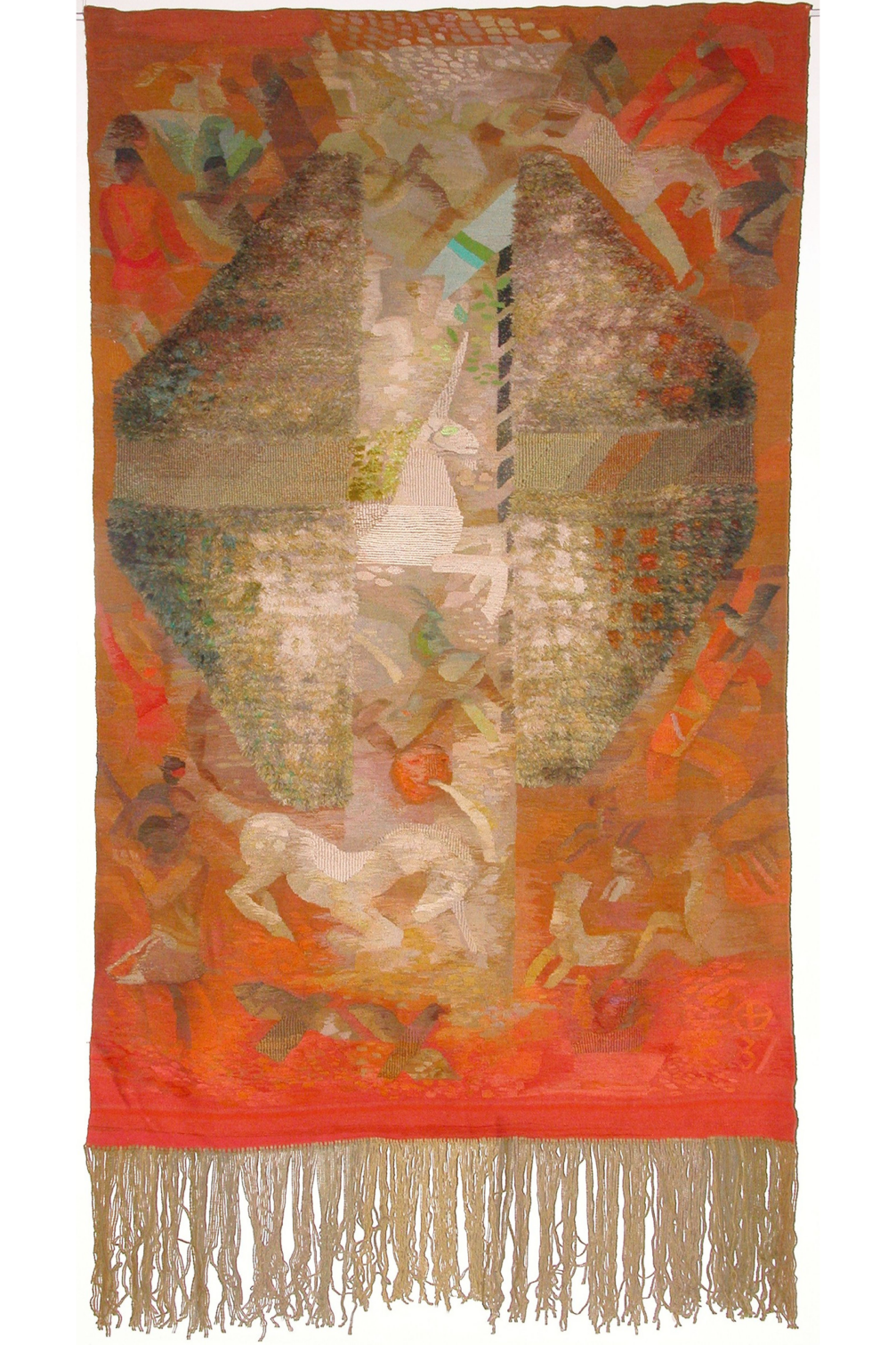
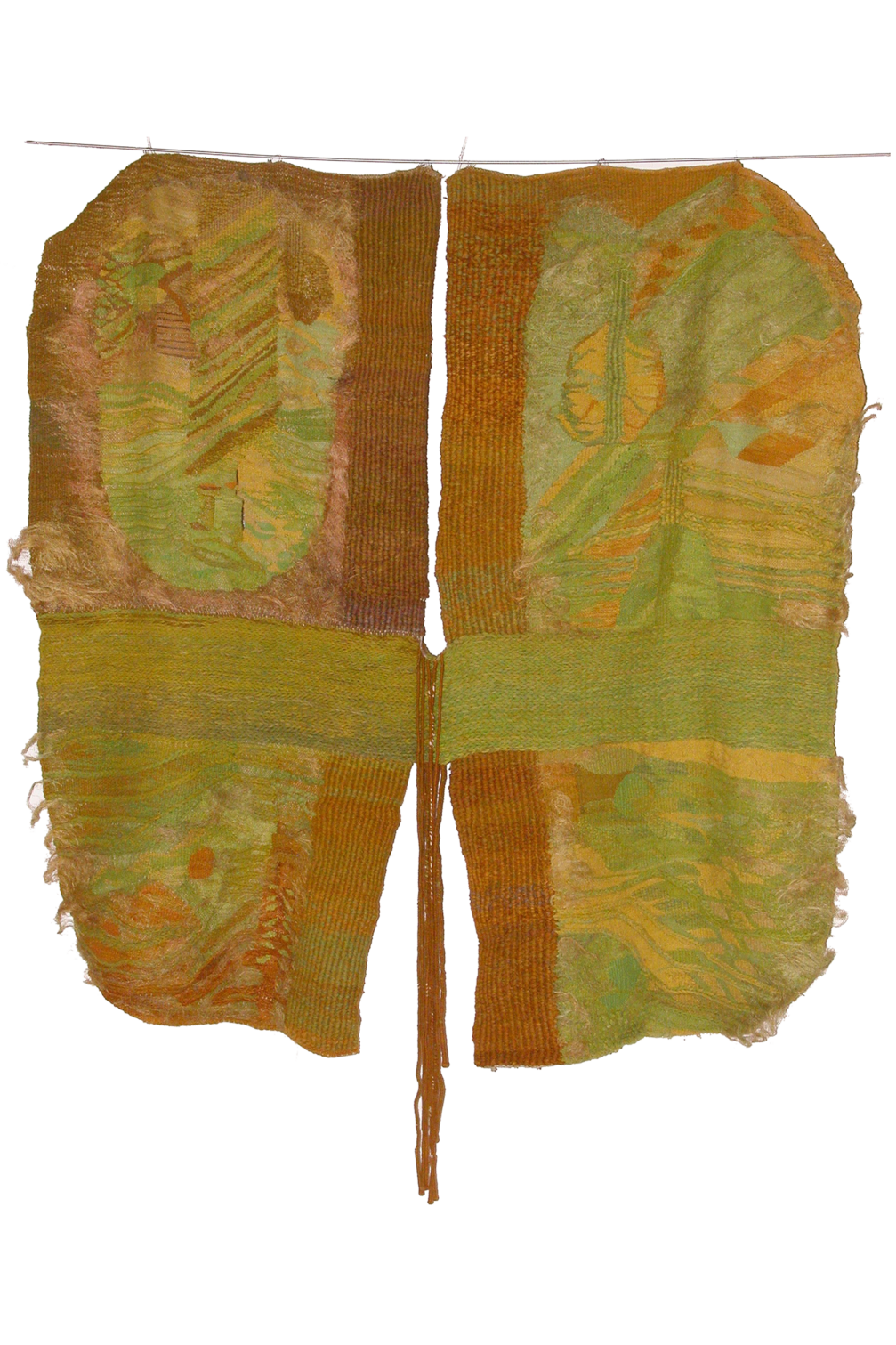
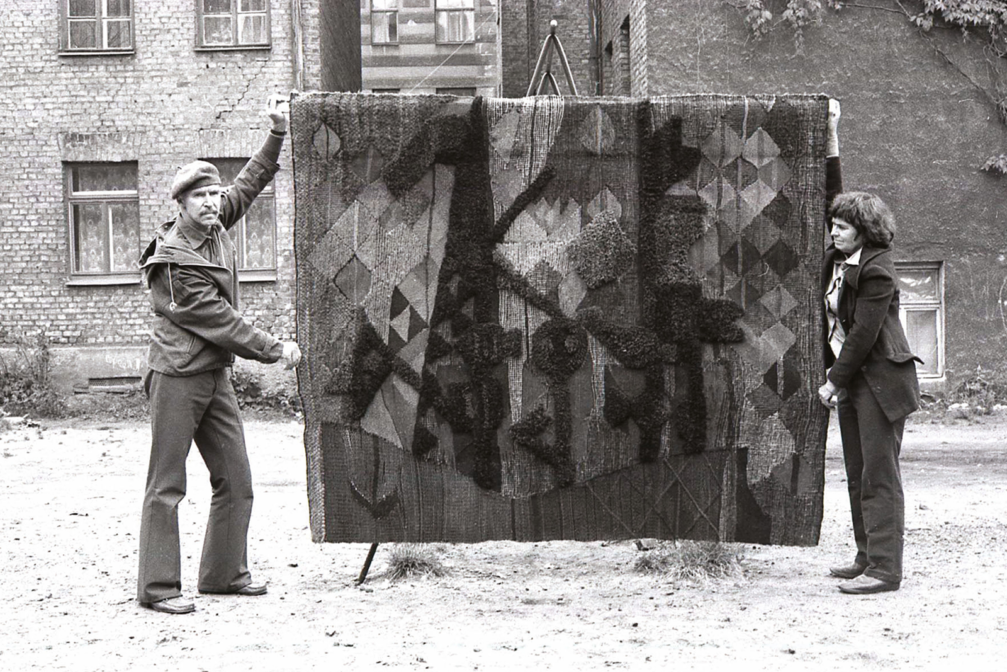
From December 18 to February 8, the Museum of Decorative Arts and Design (MDAD) invites visitors to see the exhibition Shelter for the Unicorn, dedicated to the centenary of Latvian textile artist Georgs Barkāns. He was one of the most influential figures in the heyday of Latvian textile art in the second half of the 20th century, developing his own distinctive compositional structure and nuanced tonal palette, drawing inspiration from both Latvian and world cultural heritage. The exhibition will feature Barkāns’ most valuable works — large-format tapestries, tie-dyes, and assemblages.
Georgs Barkāns (1925–2010) was one of the leading personalities in Latvian textile arts during its major upswing in the second half of the 20th century. From the 1960s onward, textile arts in Latvia broke away from their status as applied arts and grew increasingly modern, figurative, and experimental.
Vilnis Vējš, curator of the MDAD exhibition Shelter for the Unicorn, points out that Georgs Barkāns was an innovator and a restless spirit in both textile art and design education: «His vivid imagination and creative endeavors had to abide by the rules dictated by the occupying regime. Still, the master managed to prevent it from showing directly in his works, neither expressing endorsement nor protest. His creative strategy was a lifelong mission to provide cultural education by highlighting the legacy of past generations and solidifying the standing of Latvian art within the European cultural landscape. His unicorn-themed tapestries can still be seen today as a deliberate artistic stance against the homogeneity of the surrounding world.»
Georgs Barkāns arrived at textile art through an unconventional path. Trained as an architect, he studied at the University of Latvia’s Faculty of Architecture while also exploring painting at the Art Academy of Latvia. A pivotal encounter during his studies was with Dzidra Ozoliņa (1922–2014),, his future wife and close creative collaborator, whose contribution played a significant role in the development of his textile works. Alongside his architectural practice and participation in numerous design competitions, Barkāns gradually expanded his artistic focus beyond architecture.
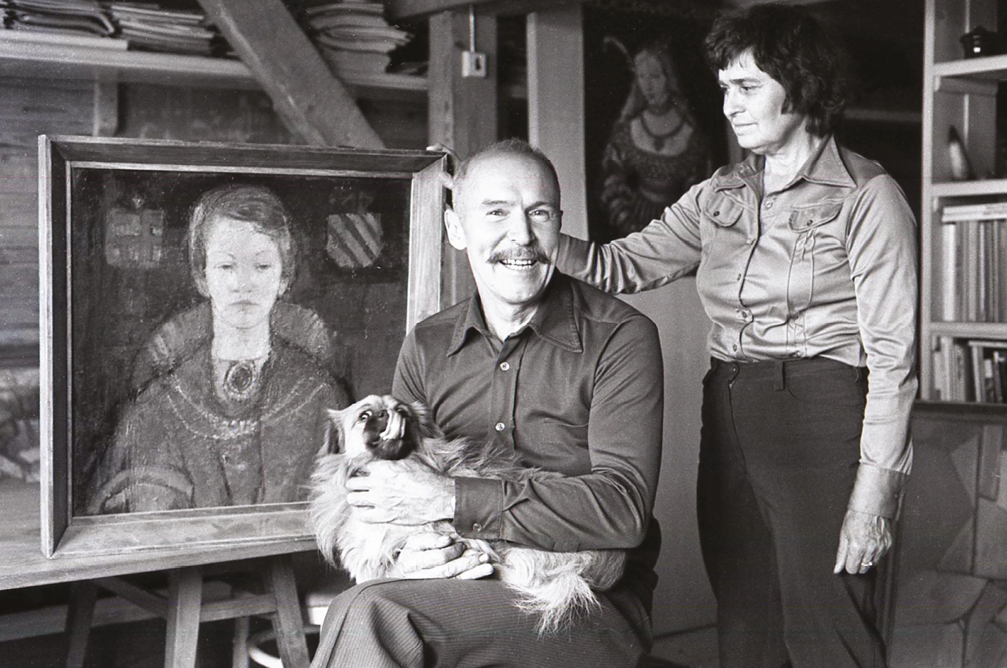
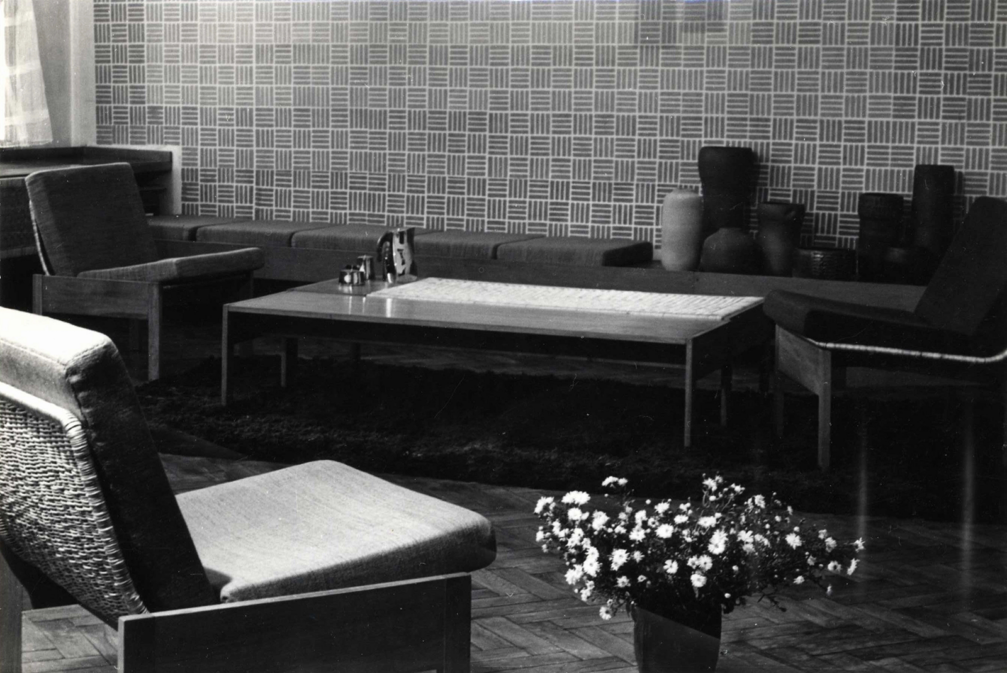
A decisive turning point came in 1958, when Barkāns began teaching at the Riga Secondary School of Applied Arts. During a period of major transformation at the school, driven by a shift towards modern design influenced by Bauhaus, Scandinavian design, and folk art, Barkāns became one of the key figures shaping its new methodology. It was there, under the guidance of master weaver Emma Skujiņa, that Barkāns and Ozoliņa learned weaving — often taking over the looms in the evenings, after students had left.
Barkāns’ textile works are defined by strong compositional structures influenced by Proto-Renaissance and Cubism, as well as a rich, finely nuanced colour palette. His themes draw on Latvian ethnography, Riga’s architectural heritage, and broader world cultures, frequently entering the realm of mythology. The unicorn became a recurring and particularly significant motif, inspired by medieval European tapestry traditions Barkāns encountered at the Musée de Cluny in Paris.
The exhibition Shelter for the Unicorn brings together key works from Barkāns’ extensive creative legacy, reflecting the remarkable artistic vitality he shared with Dzidra Ozoliņa. The exhibition features large-scale tapestries, batiks, and assemblages from Latvian museum and private collections, complemented by photographs by Atis Ieviņš. Curated by Vilnis Vējš, with visual dramaturgy by scenographer Reinis Dzudzilo, the exhibition honours Barkāns’ principle of symmetry while revealing the architectural character of the Museum of Decorative Arts and Design — Riga’s oldest surviving sacred building.
More about the exhibition and related events — on the MDAD website.

Viedokļi