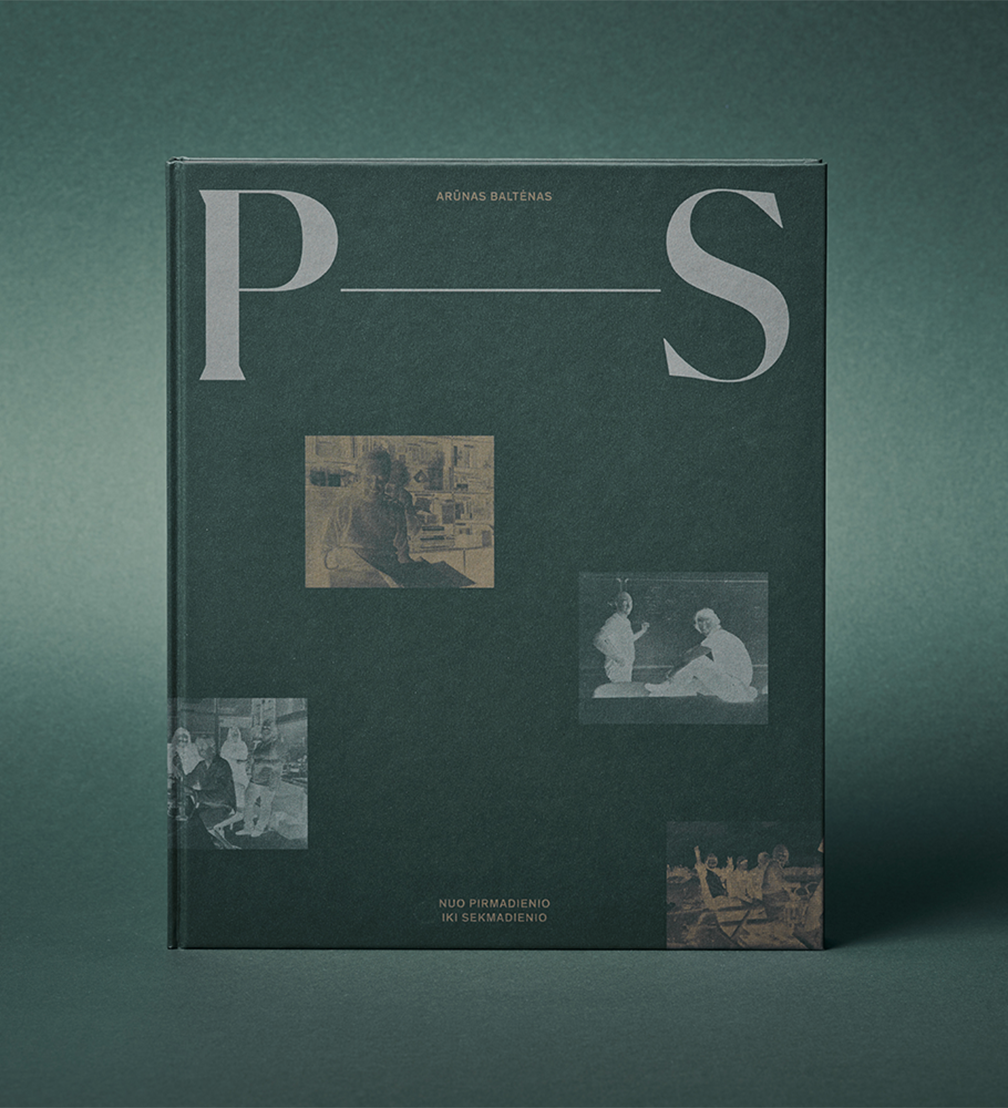
Photographer Arūnas Baltėnas’ book «P—S. Nuo pirmadienio iki sekmadienio» (P—S. From Monday to Sunday), published by the Lithuanian National Museum, has been recognised as last year’s most beautiful Lithuanian book in the Photo Publications category. The book is dedicated to representatives of various professions in Lithuania, capturing their work in photographs and personal stories. The design of the publication, created by Alexey Murashko, highlights the documentary power of photography and focuses on the heroes of the stories, creating a structured visual rhythm.
The book P—S is based on Arūnas Baltėnas’ 2016–2018 photo project dedicated to the working people of Lithuania. The publication compiles portraits and brief stories of people captured in photographs, representing more than a hundred professions — from teachers to pathologists, from members of special forces to kabuki theatre actresses. The stories in the book reveal the personalities and experiences of the subjects, allowing the reader to symbolically become their conversation partner.
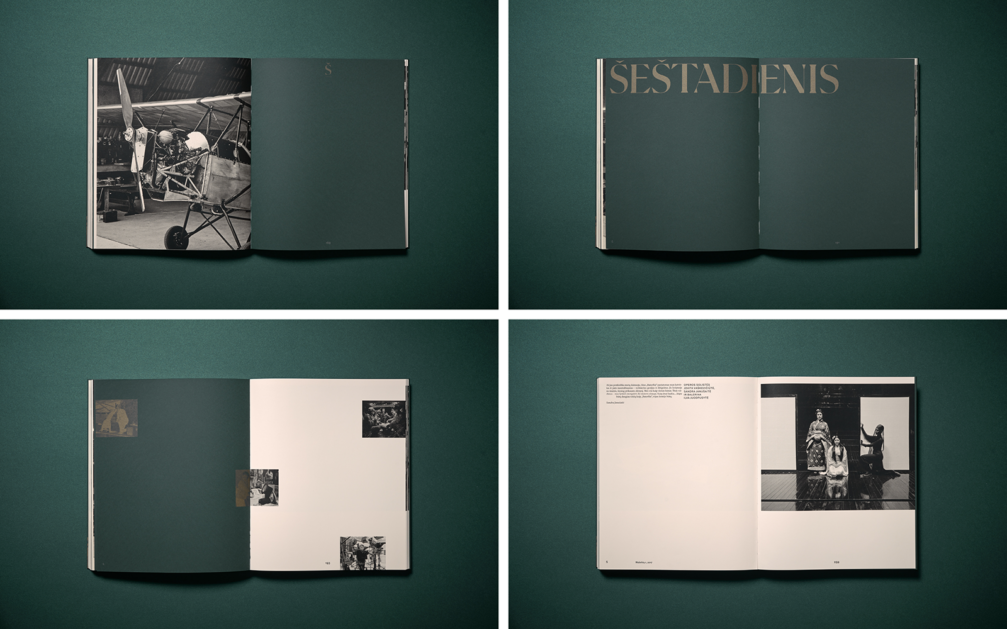
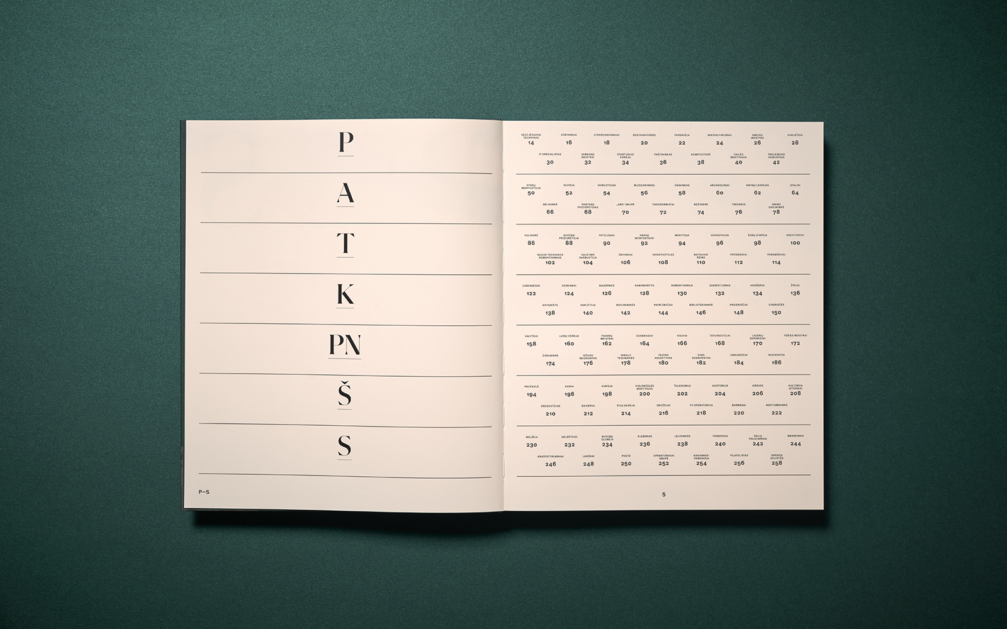
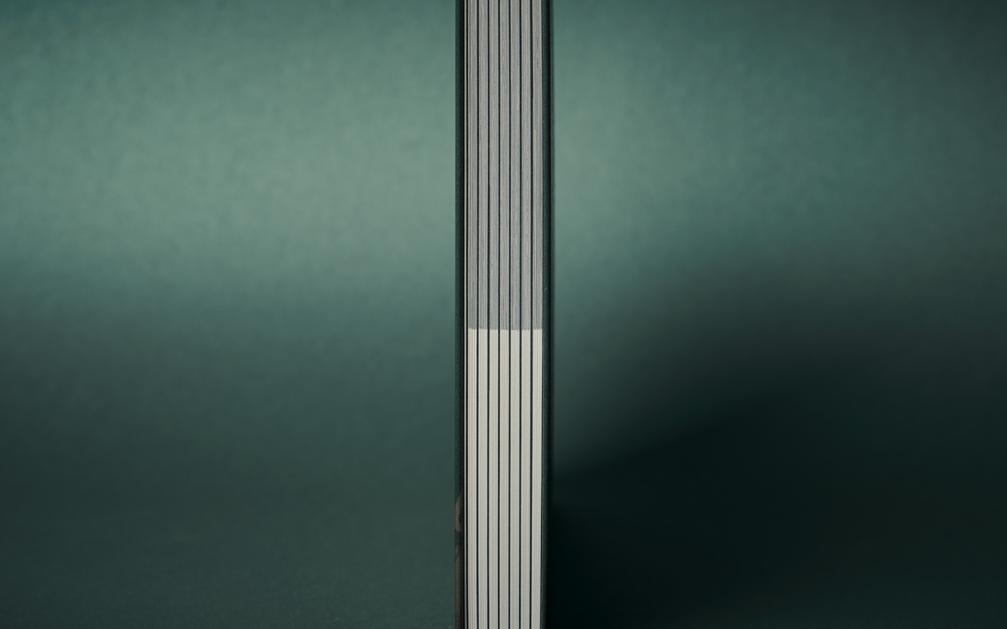
The content of the book is structured into seven days of the week, with professions divided more or less subjectively between them. The division into days can be seen even before opening the book — seven evenly spaced dark lines are visible on the edges of the book block, formed by the chapter dividers. To emphasise the connection with the visual rhythm of the calendar, the weekday divider pages are printed in a metallic greenish-silver tone, while the section dividers for Saturdays and Sundays are printed in bronze. Contrasting with the metallic sheen of the dividers, warm-toned paper is used for the body of the publication. Alexey Murashko points out that the book’s restrained design elements — subtle metallic printing, a retro-style cover, and the tonal solution of the publication — were created to «honour the hard work of everyday life».
The central visual motif of the book, which begins on the cover, tells of the transformations in the process of creating analogue photography — from negative to large-format print. The negative images are reproduced in their natural size — the project was photographed with 6×7 cm medium format film — emphasising the material and technical dimensions of photography. To achieve an effect similar to analogue photography on satin photo paper, the publication is printed in a stochastic raster (a type of halftone printing where dots are randomly arranged in varying densities depending on the darkness of the grey tone) using two black colours and a dispersion varnish. The high print quality achieved by the Jelgava printing house ensures nuanced tonality and detail, which is particularly important in documentary photography.
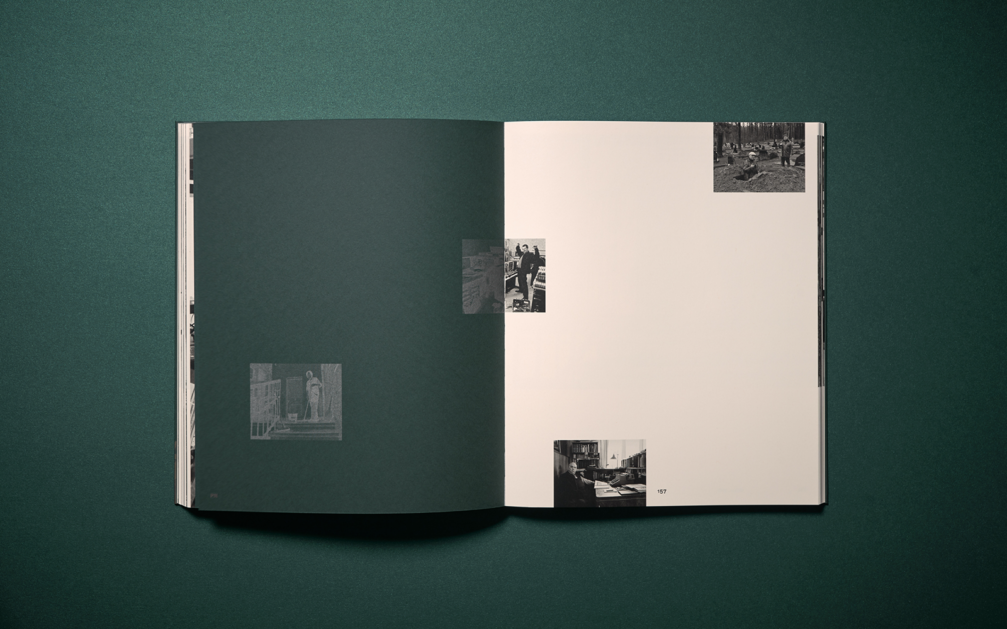
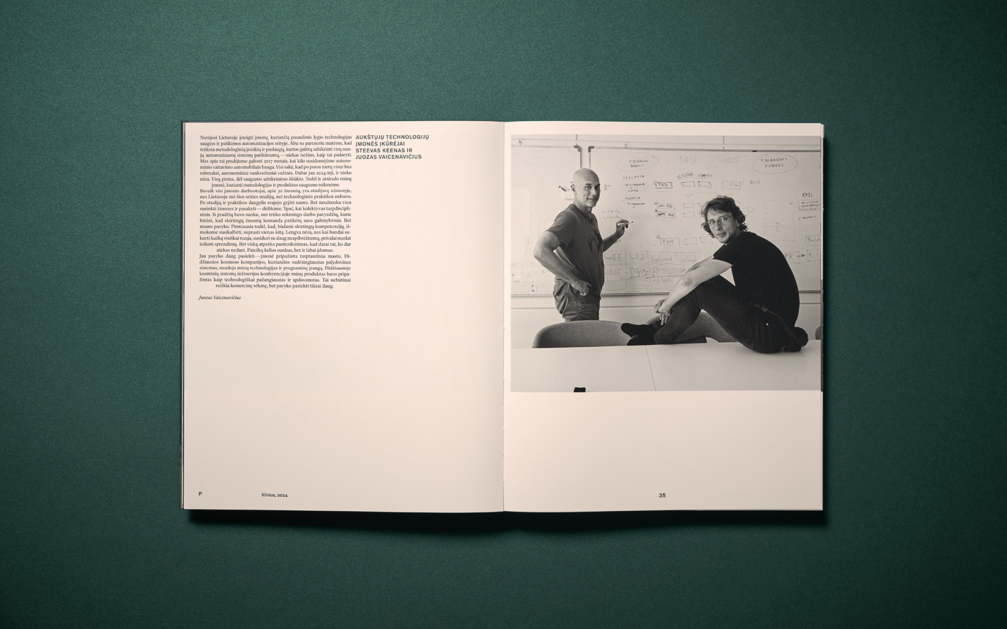
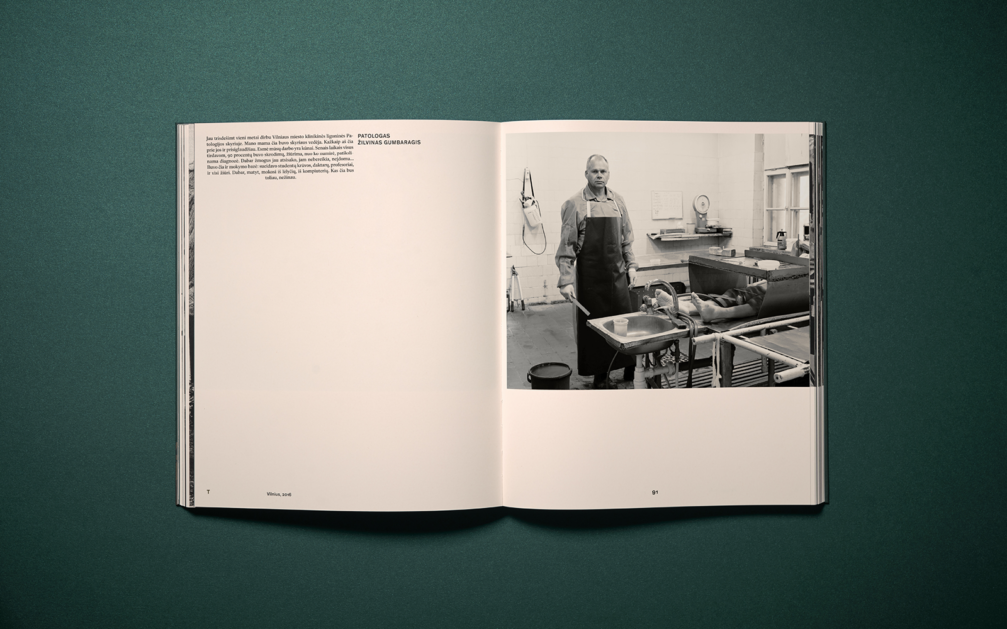
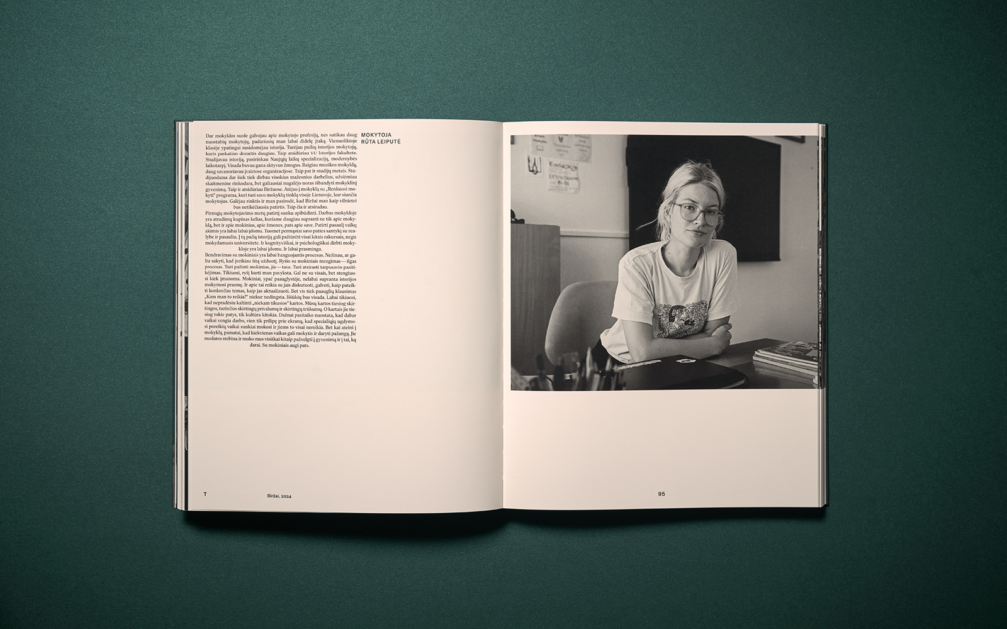
The typography and layout of the publication are designed to enhance the expressiveness of both the text and the images. In the typical layout, the text is placed on the left-hand page with symmetrical alignment along the central axis and centred lines at the end of each paragraph, while the place and date information is placed at the bottom of the column. This solution activates the empty space in the spread and dramatically highlights Arūnas’ photographs, which are asymmetrically placed on the right-hand side, creating a dynamic composition.
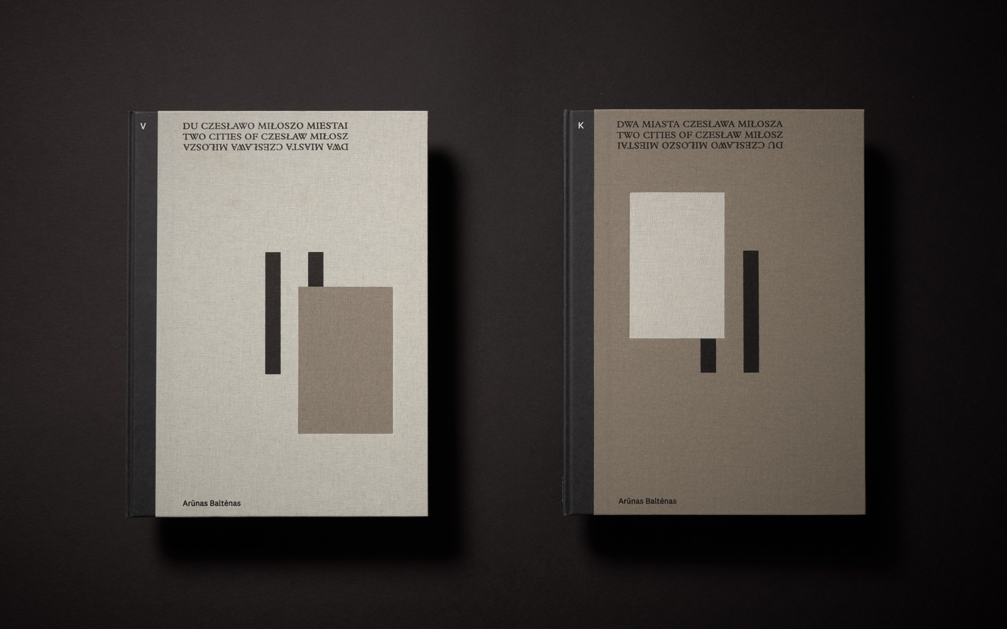
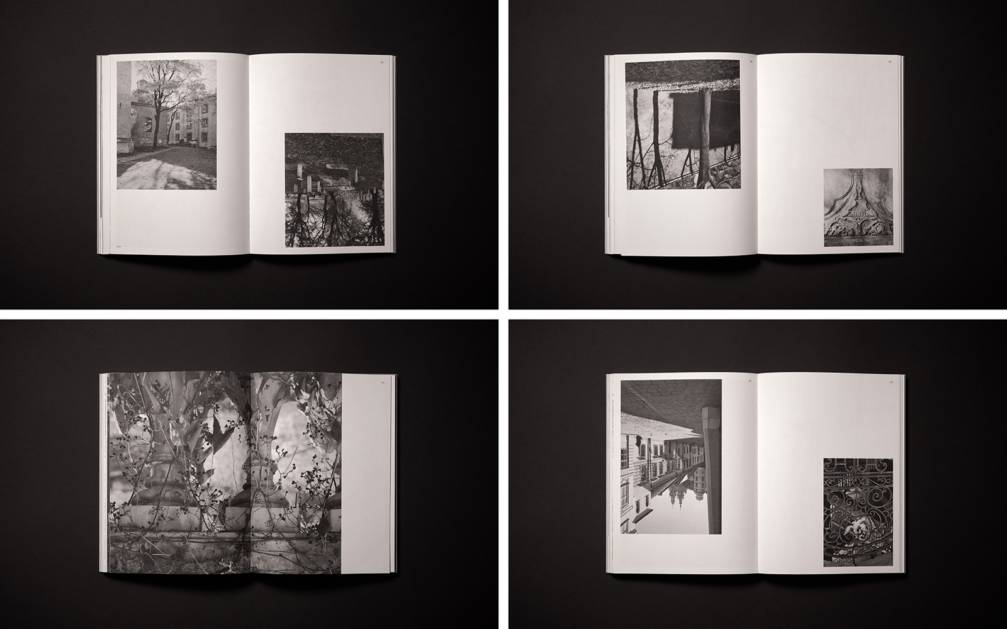
Alexey emphasises that the result and the achieved award are proof of the power of long-term cooperation between the photographer, designer, and printing house. This is already the second book produced in this collaboration to be awarded in the Lithuanian Book Art Competition. In 2024, Arūna Baltēna’s book «Du Czesławo Miłoszo miestai» (The Two Cities of Czesław Miłosz), with Alexey’s design, also printed at the Jelgava printing house, received a diploma in the same category.
The Lithuanian Book Art Competition (Knygos meno konkursas), organised and funded by the Ministry of Culture of the Republic of Lithuania, is one of the most important events in the country’s book industry. Submitted publications are divided into six categories. Competition participants are evaluated by two juries — a commission of experts and practitioners and a book art commission. In each category, a main prize and two diplomas are awarded, and the winner of the competition’s Grand Prix is selected. The competition award ceremony takes place during the Vilnius Book Fair, which is the largest book event in the Baltics, attracting more than 50,000 visitors over four days.
Viedokļi