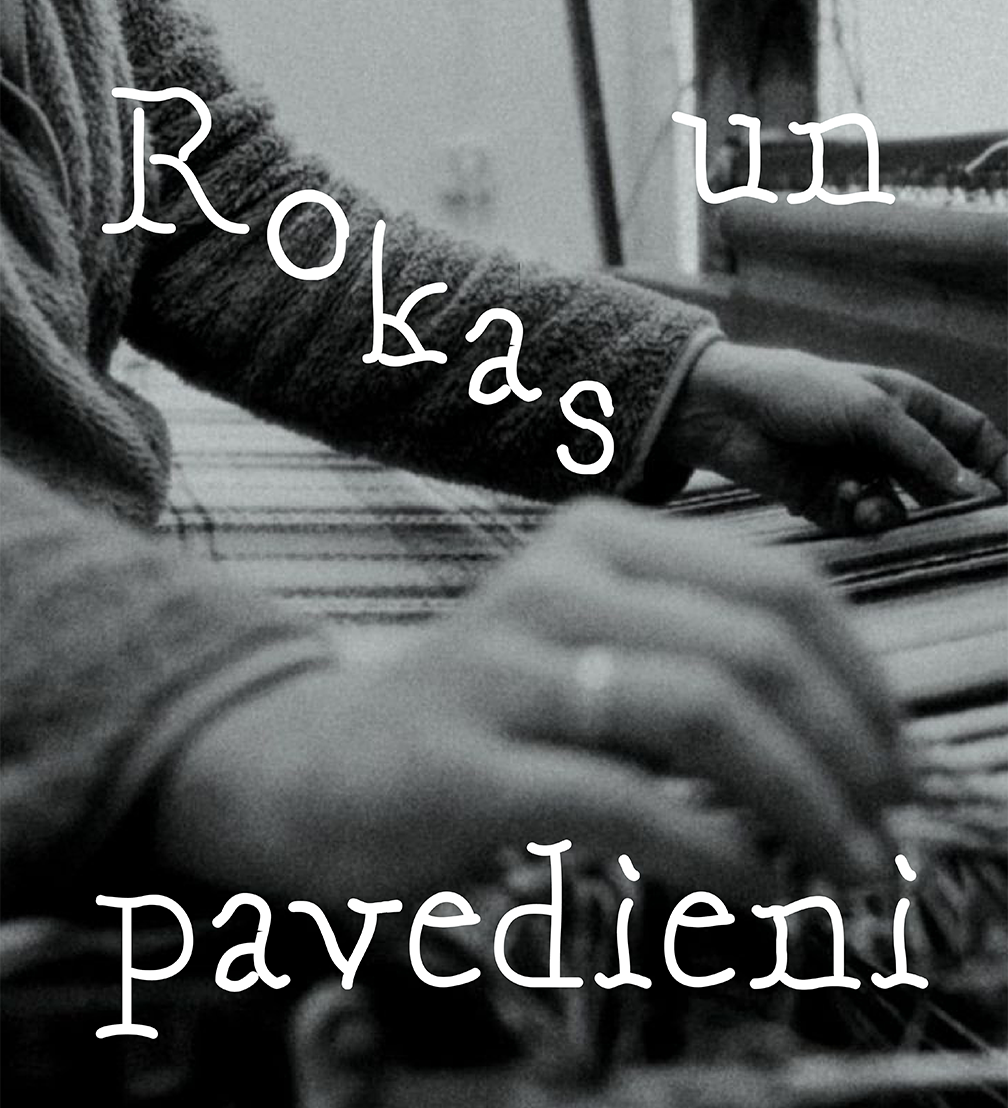
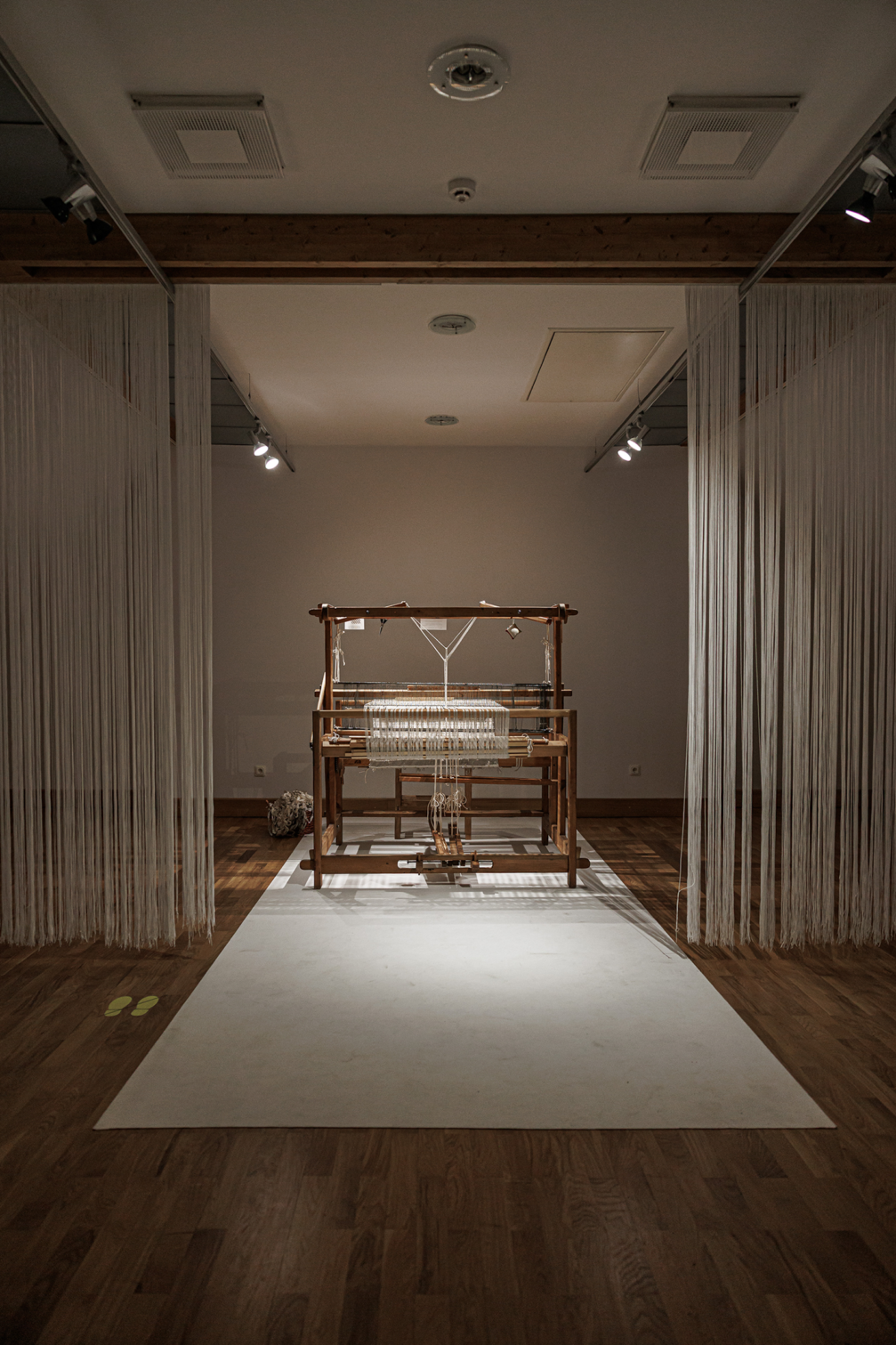
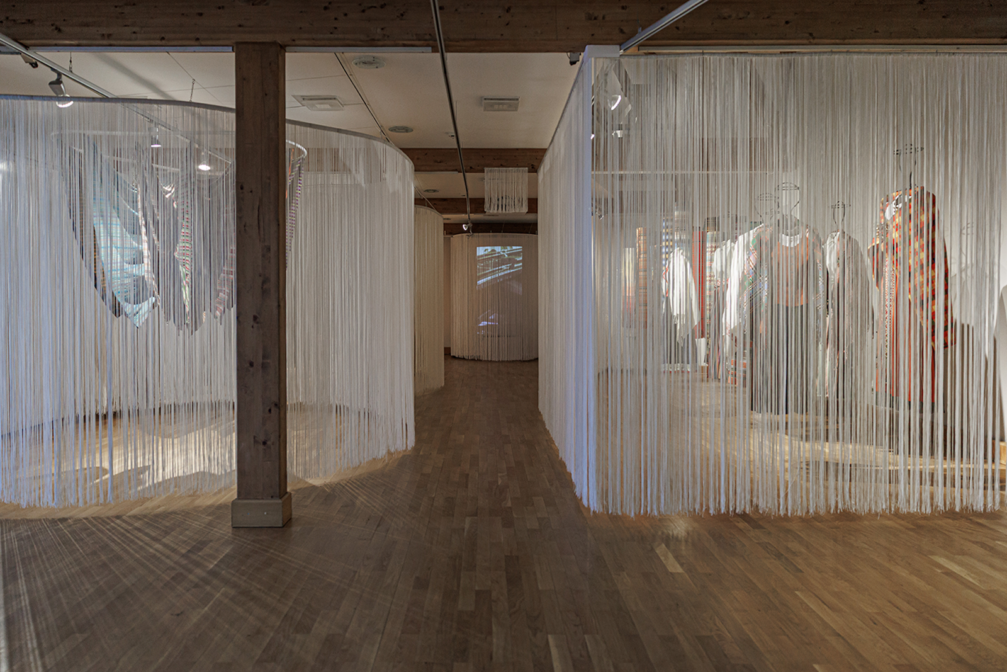
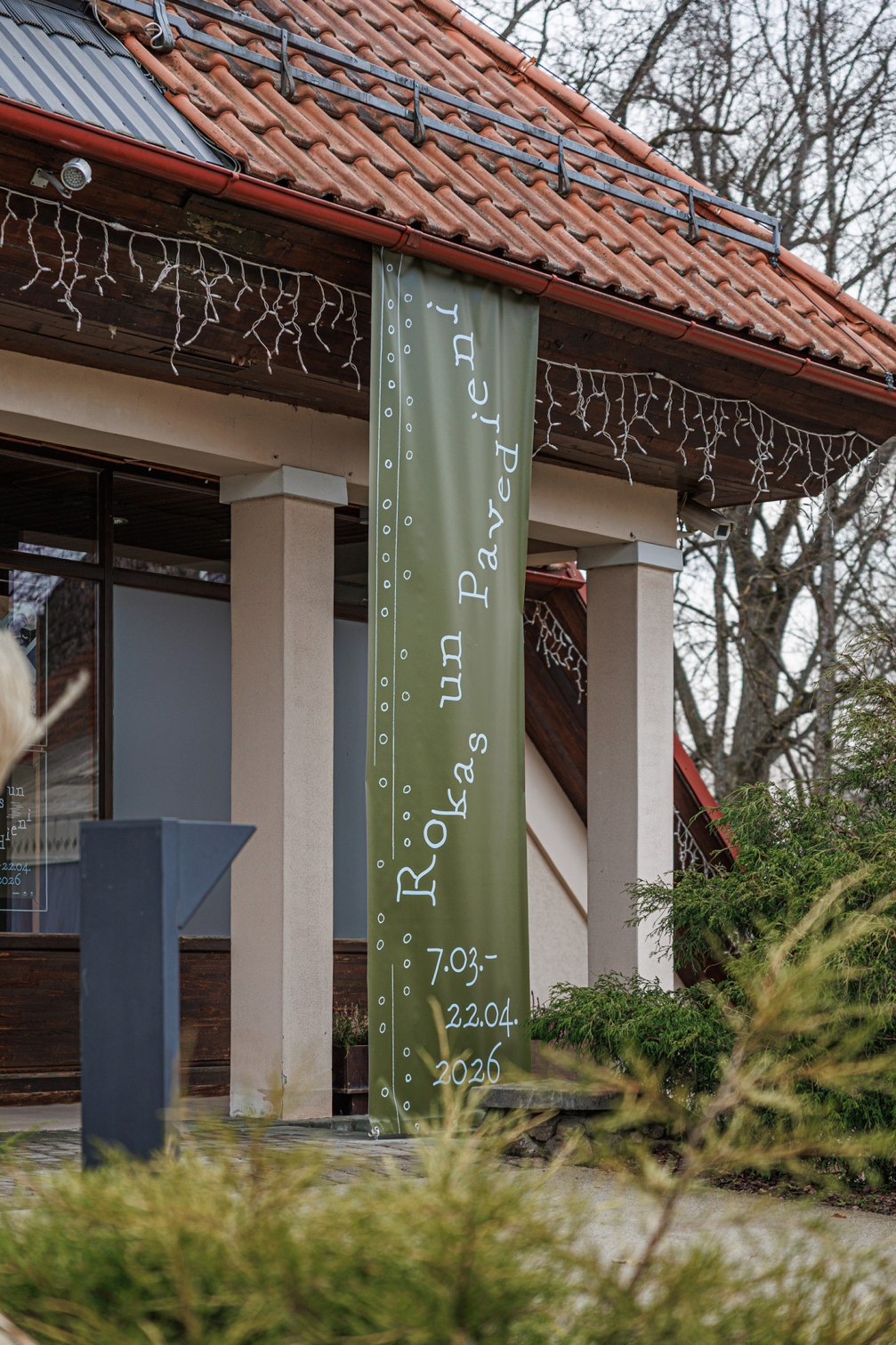
Through April 22, the Valmiera Museum is hosting the exhibition «Rokas un pavedieni» (Hands and Threads), marking the 80th anniversary of the folk applied arts studio Valmiera, featuring both traditional and contemporary works. The exhibition’s scenography and graphic design concept was created by the design and communication studio Ausme, and its core element is the thread, which becomes a symbol of time, memory, and identity.
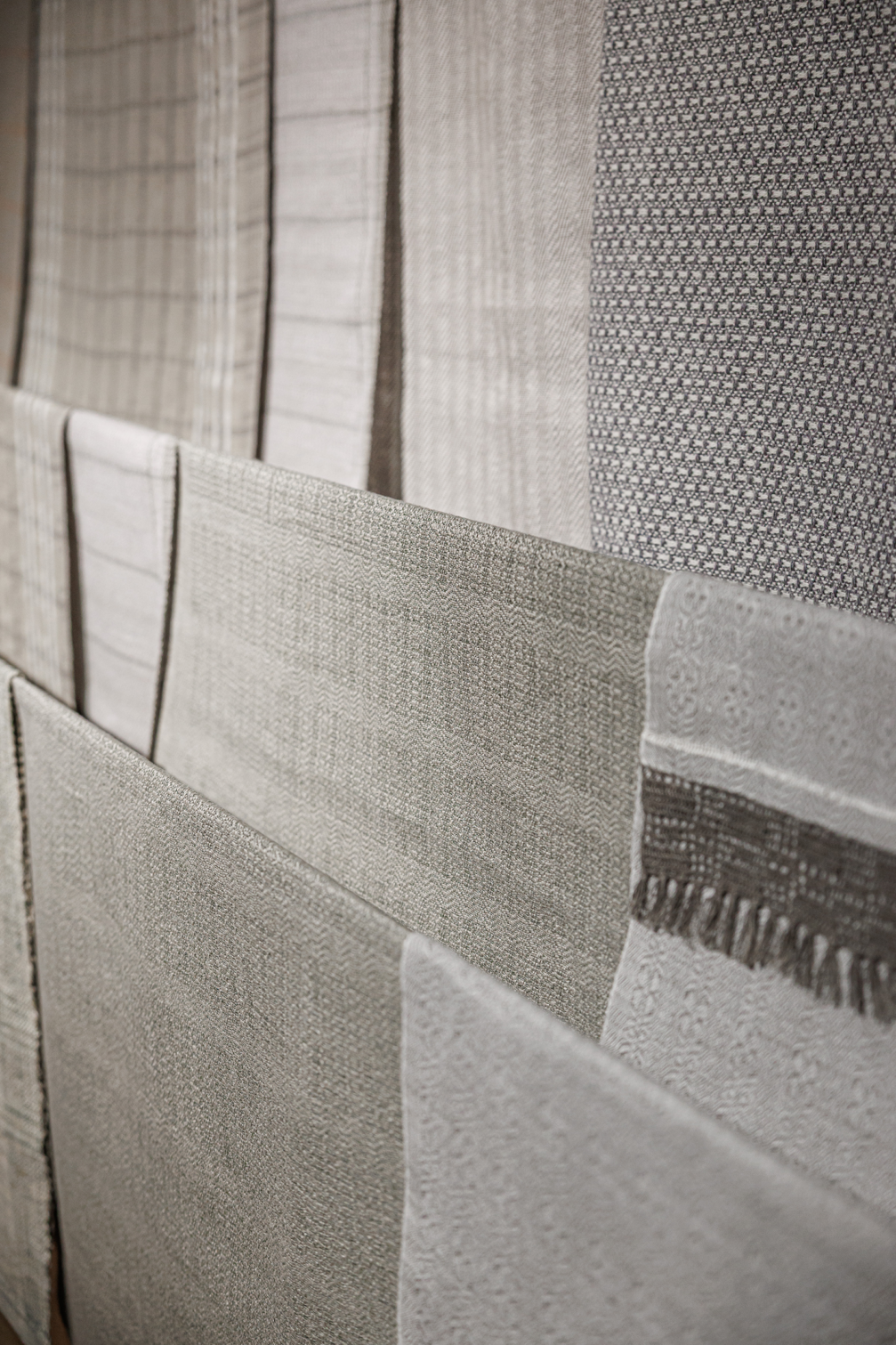
For 80 years, the folk applied arts studio Valmiera has been one of the most significant centres of weaving traditions in Vidzeme and the oldest folk applied arts studio in Latvia. Tradition and creative development have always coexisted in the studio’s work — alongside ethnographic folk costumes, blankets, woollen shawls, and linen towels, contemporary home textiles are created. The work of the craftswomen is rooted in the belief that folk applied art is a living cultural language in which tradition continues to live and evolve through contemporary interpretations. Over the years, dozens of artisans have worked in the studio, passing down skills from generation to generation.
«In creating this exhibition, our goal was to emphasise that folk applied art has no age limits — it can be created, studied, and explored by people of all generations. What matters is how this heritage is presented, which is why we invited the design studio Ausme to collaborate on the project, to search for a contemporary narrative of tradition together,» says Madara Seile, the exhibition’s curator and a member of the Valmiera folk art studio.
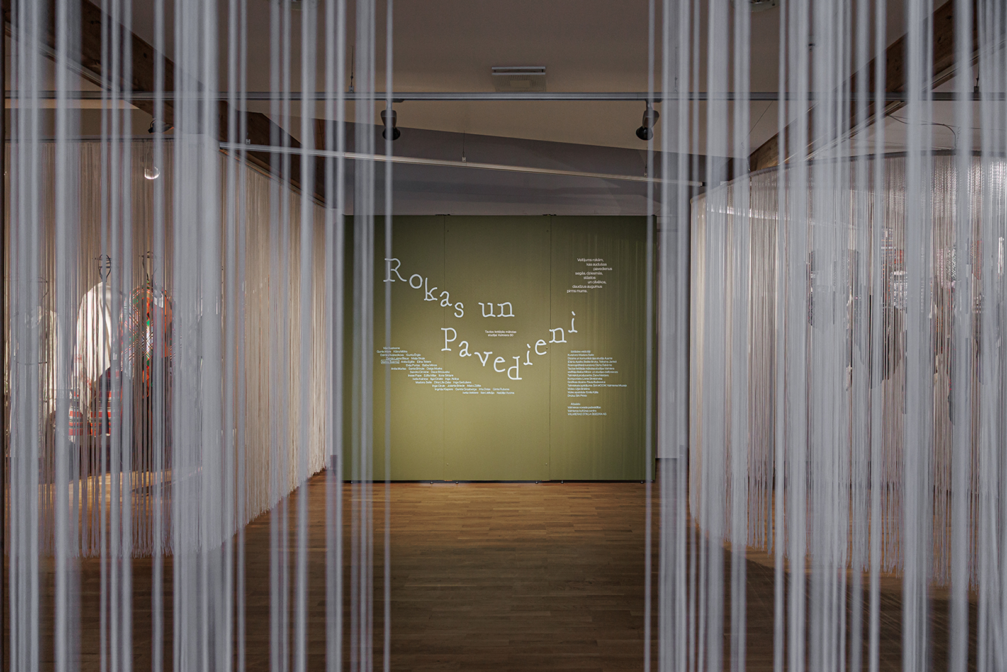
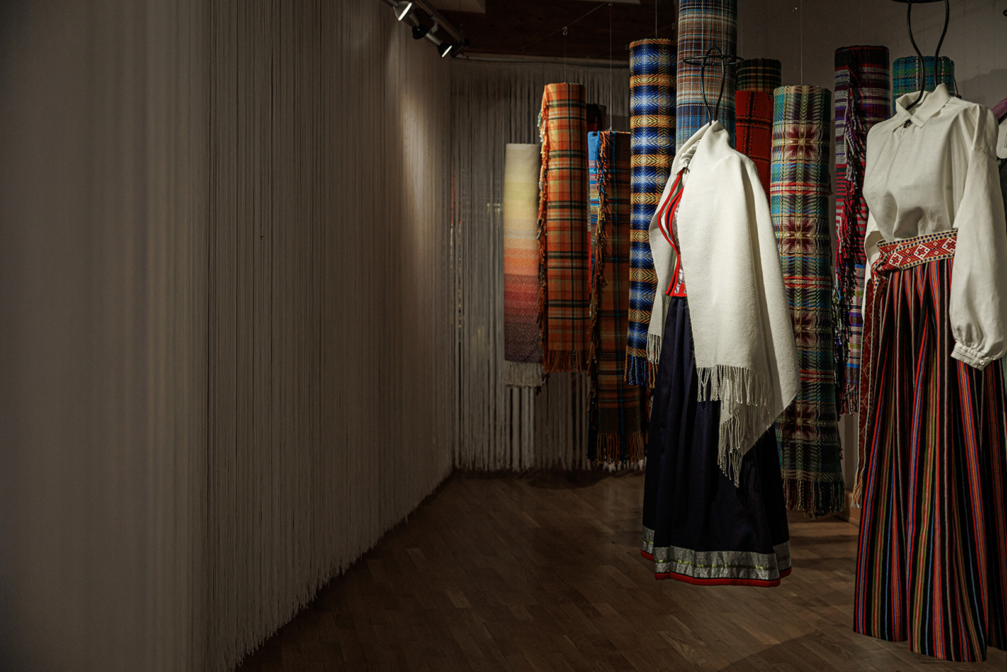
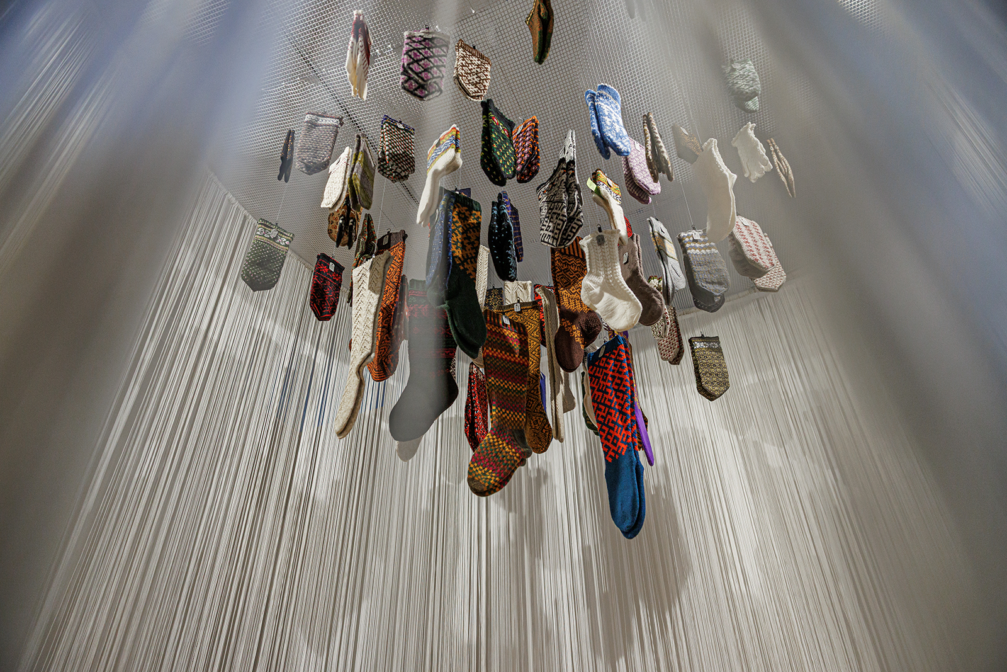
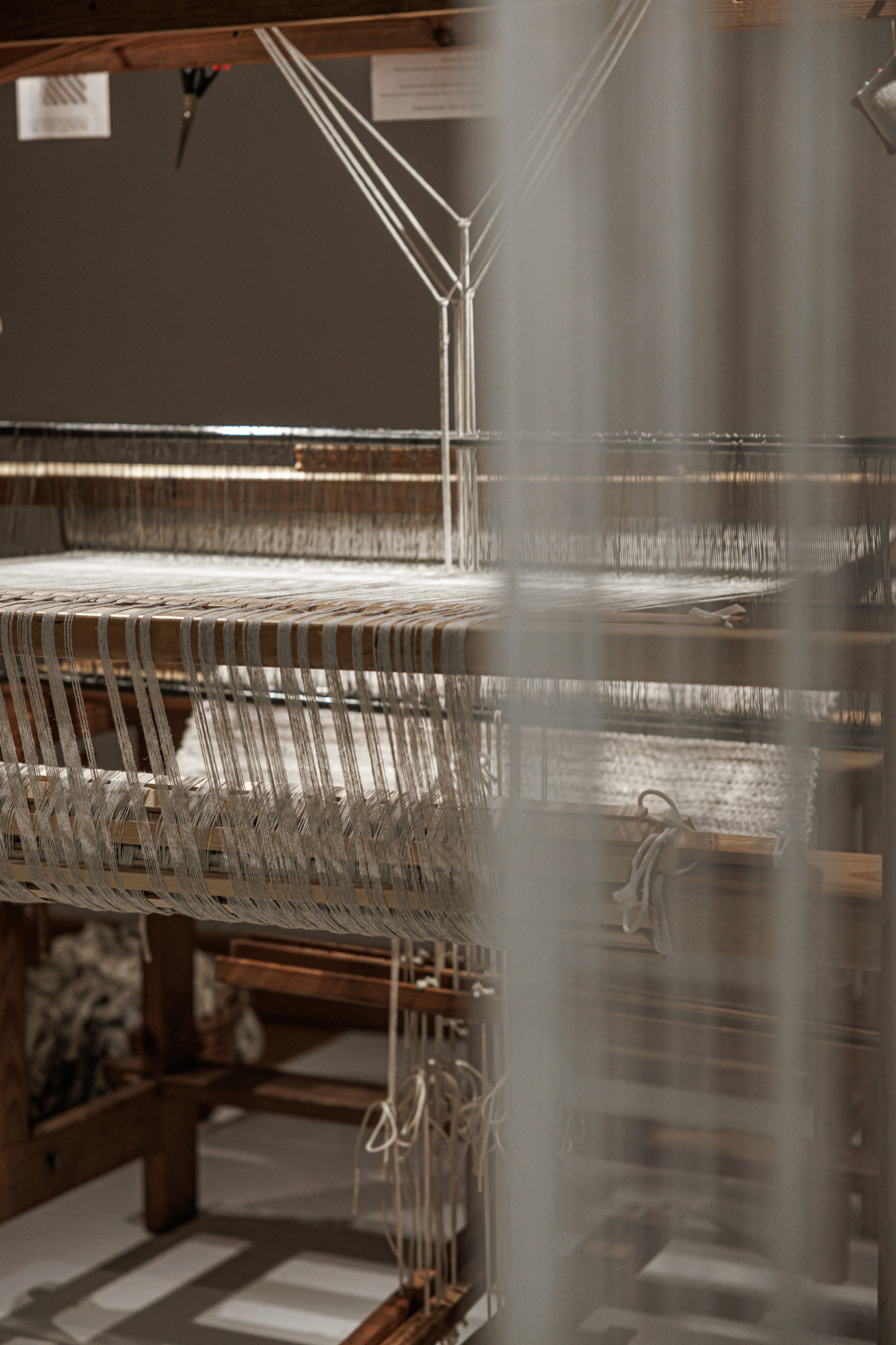
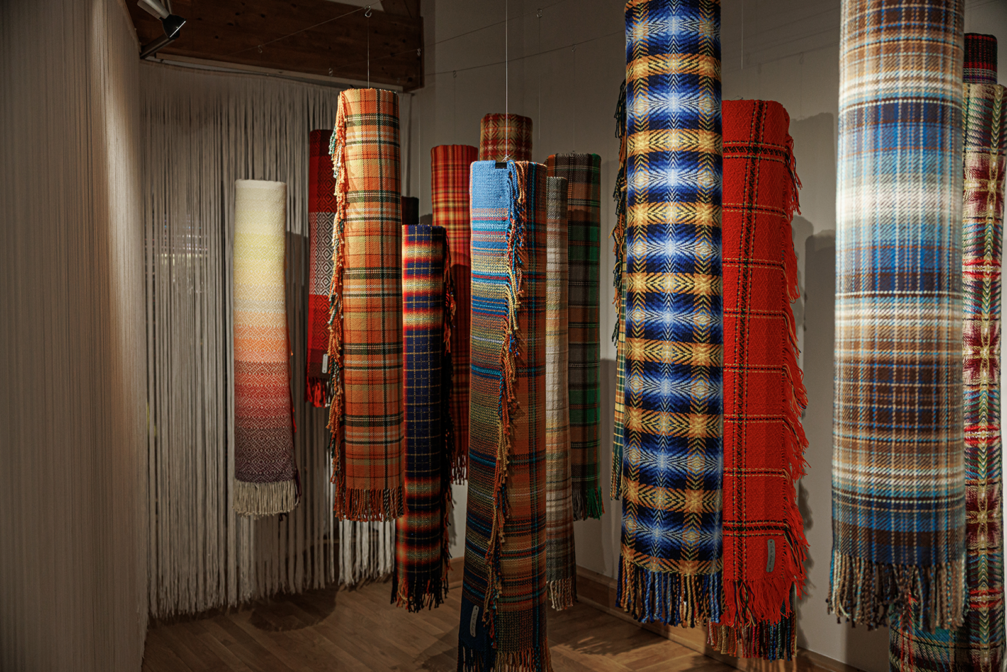
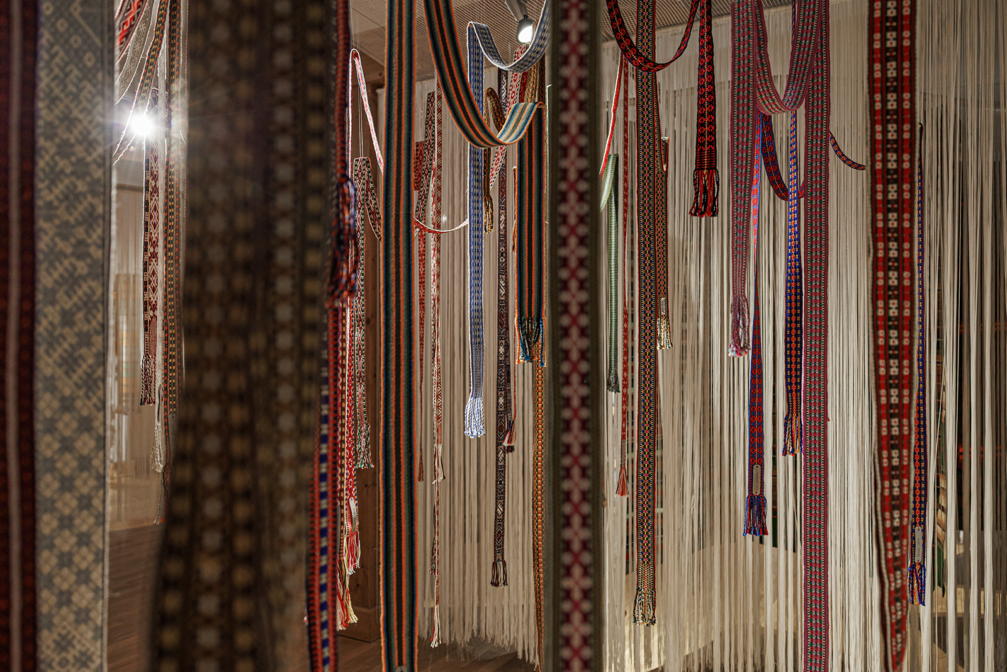
The exhibition Hands and Threads is conceived as a poetic and respectful tribute to the weavers whose hands have long woven threads into blankets, songs, and stories. The thread is also a fundamental element of the exhibition’s scenography and graphic design. The spatial design serves as an airy and translucent backdrop for the artisans’ creations, while allowing visitors to become explorers. As they part the veil of threads, a forest of belts, a grove of scarves, or a mountain of flying mittens unfolds before them. The exhibition’s emotional experience is further enhanced by a soundscape created by ethnomusicologist Liene Skrebinska.
«We wanted to create a space where tradition becomes a living, inherited ritual. Like an endless thread being pulled from one generation to the next. We perceive the thread as a metaphor for time that prompts very personal reflection. How many woven scarves lie between me and my great-grandmother? This process allows us to realise that we are all part of a great continuity,» says Dārta Apsīte, creative director of the design studio Ausme.
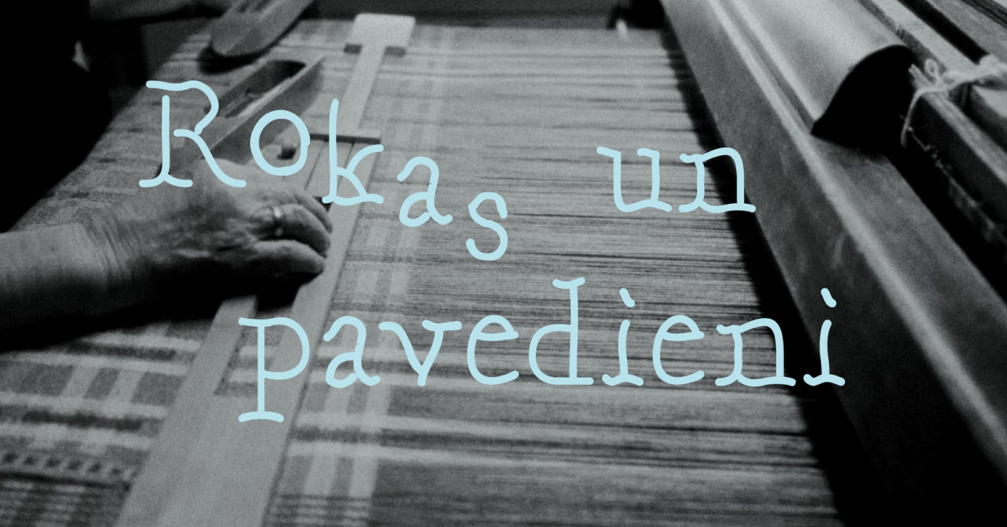
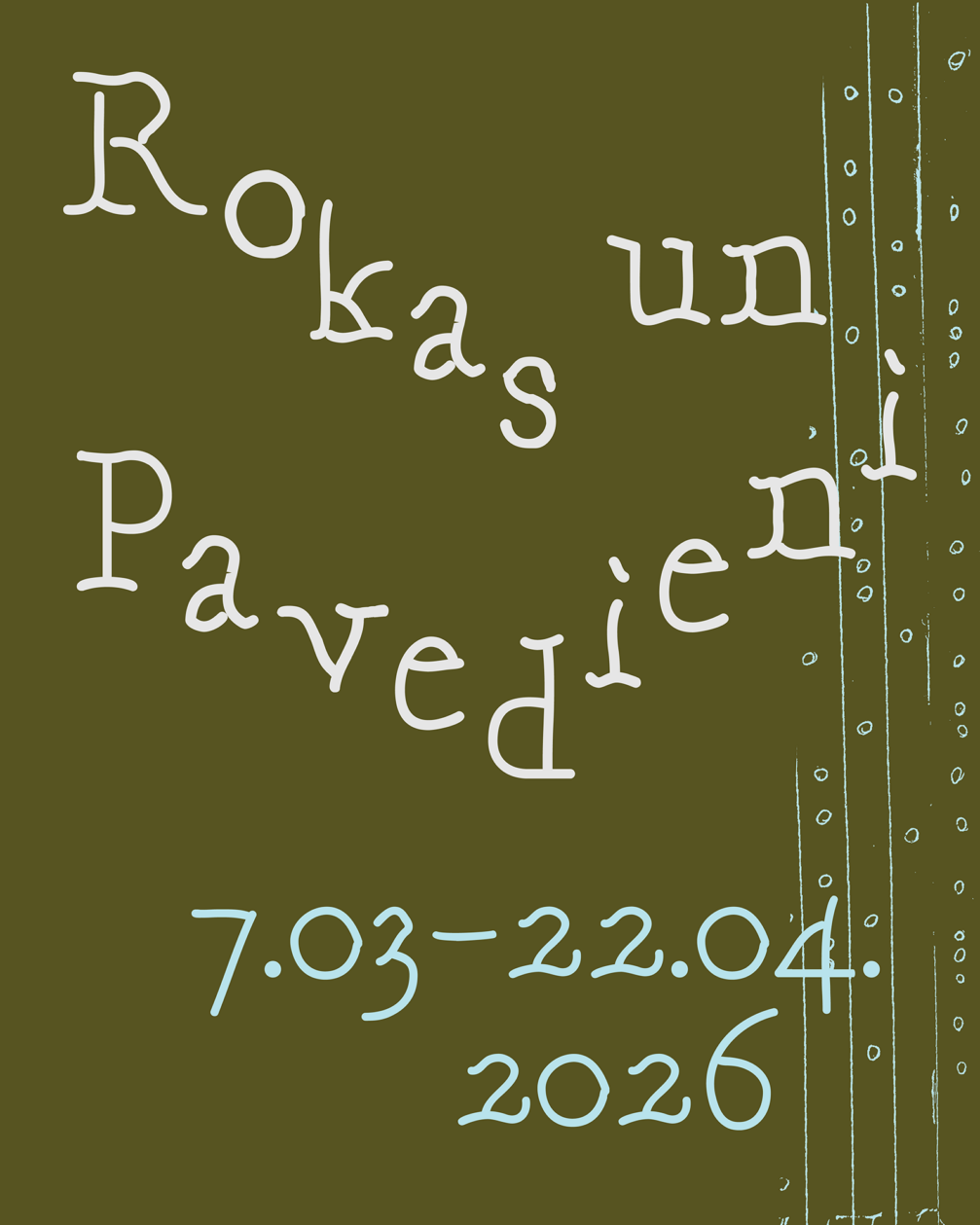
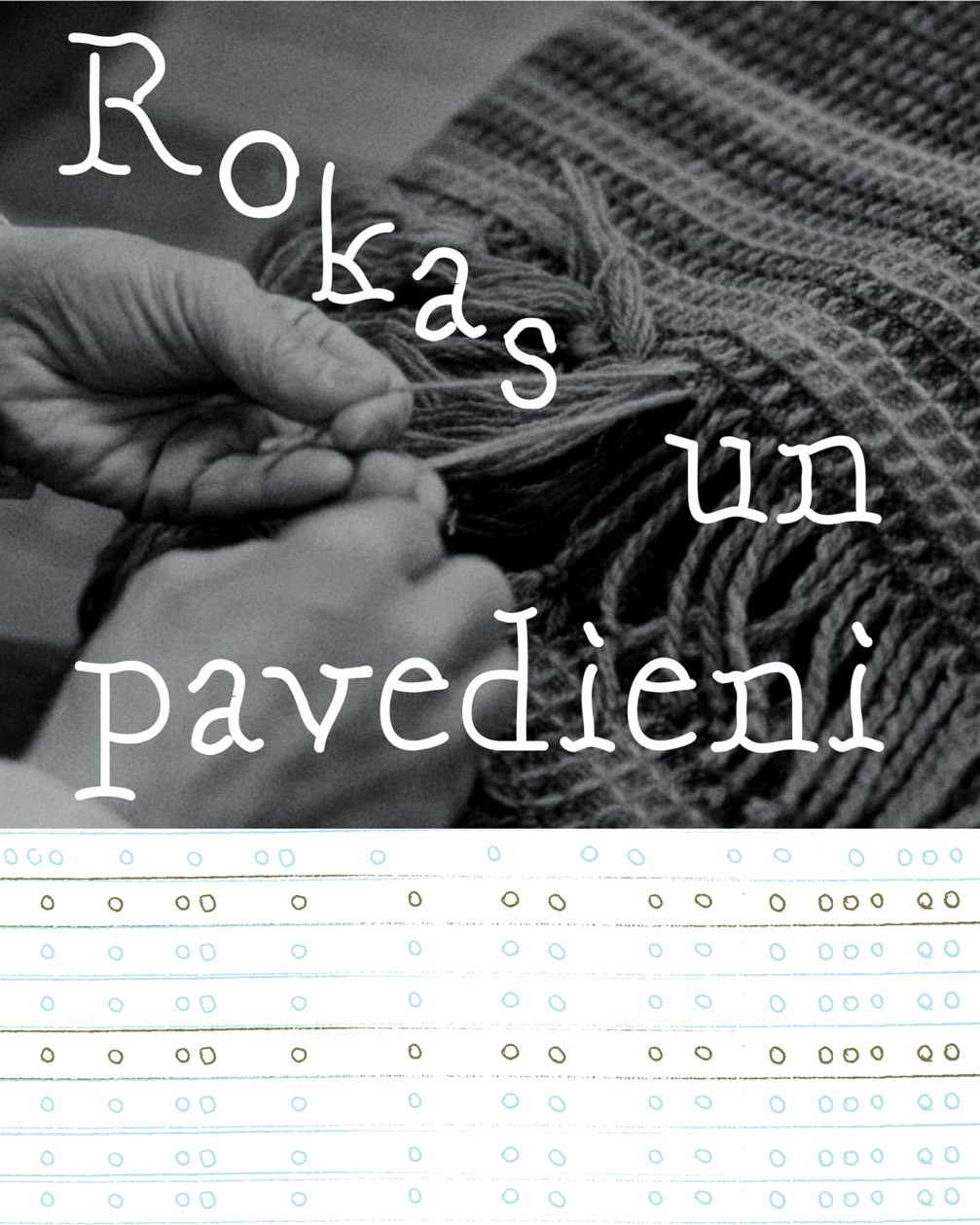
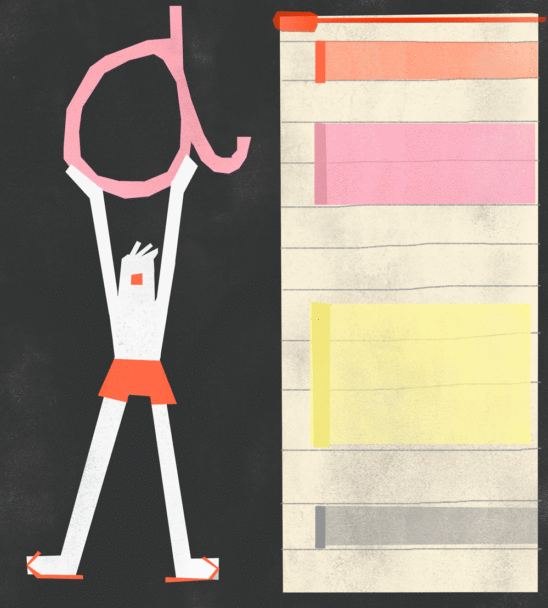
The exhibition’s graphic design, created by designer Paula Buškevica, combines references to tradition with a contemporary visual language. The typeface Garamon(d/t) used in the materials is an expressive interpretation of the classic Garamont, which visually echoes the threads used in the scenography. The layout of the letters wraps around hands visible in the photographs used in the communication materials, while the graphic elements of dots and lines are drawn from archival materials of the Valmiera studio dating back to the 1970s.
The exhibition Hands and Threads has been organised as part of the Annual Art Award of Latvia programme and will be on view at the Valmiera Museum until April 22.
Viedokļi